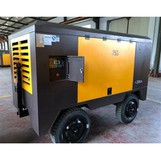
Hey there! As a supplier of mobile screw compressors, I've seen firsthand how crucial energy efficiency is in today's market. Not only does it save money on energy bills, but it also reduces the environmental impact. In this blog, I'll share some tips on how to optimize the energy efficiency of a mobile screw compressor.
1. Proper Sizing
One of the most important factors in energy efficiency is proper sizing. A compressor that's too large for your needs will waste energy by running at less than full capacity most of the time. On the other hand, a compressor that's too small will have to work harder and run more frequently, also leading to higher energy consumption.
To determine the right size for your compressor, you need to consider your air demand. This includes the volume of air you need (measured in cubic feet per minute, or CFM) and the pressure you need (measured in pounds per square inch, or PSI). You can use a flow meter to measure your current air consumption and then choose a compressor that can meet or slightly exceed that demand.
For example, if you have a mining operation and your air demand is relatively high, you might consider our 75kw Mobile Electric Rotary Screw Air Compressor for Mining. It's designed to provide a large volume of compressed air at a high pressure, making it suitable for heavy-duty applications.
2. Regular Maintenance
Regular maintenance is essential for keeping your compressor running efficiently. Over time, dirt, dust, and debris can build up in the compressor, reducing its performance and increasing energy consumption. By performing regular maintenance, you can keep your compressor clean and in good working condition.
Here are some maintenance tasks you should perform regularly:
- Change the air filter: A dirty air filter restricts airflow, making the compressor work harder. Replace the air filter according to the manufacturer's recommendations.
- Check the oil level and quality: The oil in the compressor lubricates the moving parts and helps to cool the compressor. Check the oil level regularly and change the oil according to the manufacturer's schedule.
- Inspect the belts and hoses: Worn or damaged belts and hoses can cause leaks and reduce the efficiency of the compressor. Inspect them regularly and replace them if necessary.
- Clean the cooler: The cooler helps to remove heat from the compressed air. Over time, it can become clogged with dirt and debris, reducing its effectiveness. Clean the cooler regularly to ensure proper heat transfer.
3. Use the Right Control System
The control system of your compressor plays a big role in its energy efficiency. A good control system can adjust the compressor's output to match your air demand, preventing it from running at full capacity when it's not needed.
There are several types of control systems available, including:
- Start/stop control: This is the simplest type of control system. It turns the compressor on when the air pressure drops below a certain level and turns it off when the pressure reaches a set point. While this system is easy to use, it can cause the compressor to cycle on and off frequently, which can increase energy consumption.
- Load/unload control: This system allows the compressor to run continuously, but it unloads the compressor when the air demand is low. When the demand increases, the compressor loads up again. This system is more energy-efficient than start/stop control because it reduces the number of starts and stops.
- Variable speed drive (VSD) control: A VSD control system adjusts the speed of the compressor motor to match the air demand. This means that the compressor can run at a lower speed when the demand is low, significantly reducing energy consumption. VSD control is the most energy-efficient option, but it's also the most expensive.
If you're looking for a portable compressor with a good control system, you might like our KYLC-18.5/13DY Best Electric Portable Screw Air Compressor Machine. It's equipped with a smart control system that can adjust the compressor's output based on your air demand.
4. Optimize the Air Distribution System
The air distribution system is the network of pipes and hoses that carry the compressed air from the compressor to the point of use. A poorly designed or maintained air distribution system can cause pressure drops and leaks, which can reduce the efficiency of the compressor.
Here are some tips for optimizing your air distribution system:
- Use the right size pipes: The size of the pipes in your air distribution system should be based on the volume of air you need to transport. Using pipes that are too small can cause pressure drops, while using pipes that are too large can be wasteful.
- Minimize the length of the pipes: The longer the pipes, the greater the pressure drop. Try to keep the length of the pipes as short as possible.
- Seal all leaks: Leaks in the air distribution system can waste a significant amount of compressed air. Regularly inspect the pipes and hoses for leaks and seal them immediately.
- Install air dryers and filters: Air dryers and filters help to remove moisture and contaminants from the compressed air, improving its quality and reducing the risk of damage to your equipment.
5. Consider Heat Recovery
Compressors generate a lot of heat during the compression process. Instead of letting this heat go to waste, you can recover it and use it for other purposes, such as heating your building or preheating water.
Heat recovery systems work by transferring the heat from the compressed air or the compressor oil to a heat exchanger. The heat exchanger then transfers the heat to a fluid, such as water or air, which can be used for heating.
By recovering the heat from your compressor, you can reduce your energy consumption and save money on your heating bills. It's a win-win situation!
6. Choose the Right Compressor for Your Application
Not all compressors are created equal. Different types of compressors are designed for different applications, and choosing the right one for your needs can make a big difference in energy efficiency.
For example, if you have a small operation with a relatively low air demand, a 90kw Small Electric Single Stage Portable Screw Compressor Machine might be a good choice. It's compact, portable, and energy-efficient, making it suitable for light-duty applications.
On the other hand, if you have a large industrial operation with a high air demand, you might need a larger, more powerful compressor. In this case, you should consult with a compressor expert to determine the best option for your specific needs.
Conclusion
Optimizing the energy efficiency of a mobile screw compressor is not only good for the environment but also for your bottom line. By following these tips, you can reduce your energy consumption, save money on energy bills, and extend the life of your compressor.


If you're interested in learning more about our mobile screw compressors or need help optimizing the energy efficiency of your existing compressor, don't hesitate to contact us. We're here to help you find the best solution for your needs. Let's work together to make your operation more energy-efficient!
References
- Compressed Air and Gas Institute. (n.d.). Compressed Air System Energy Efficiency. Retrieved from [Compressed Air and Gas Institute Website]
- Gardner Denver. (n.d.). Energy Efficiency in Compressed Air Systems. Retrieved from [Gardner Denver Website]
- Quincy Compressor. (n.d.). Tips for Improving Compressor Energy Efficiency. Retrieved from [Quincy Compressor Website]