

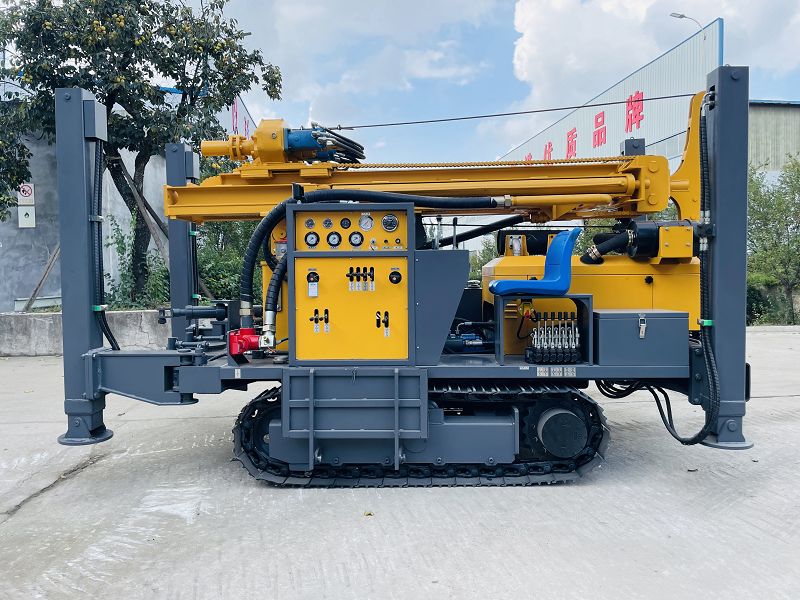
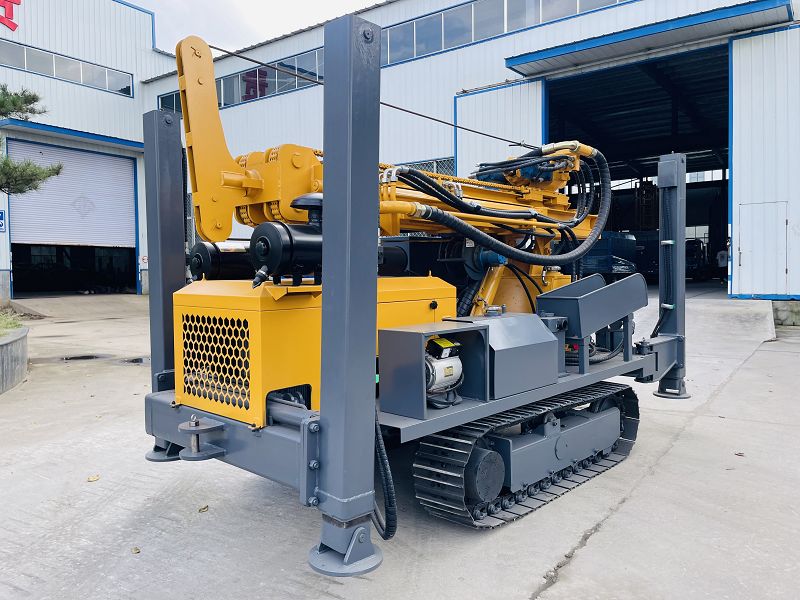
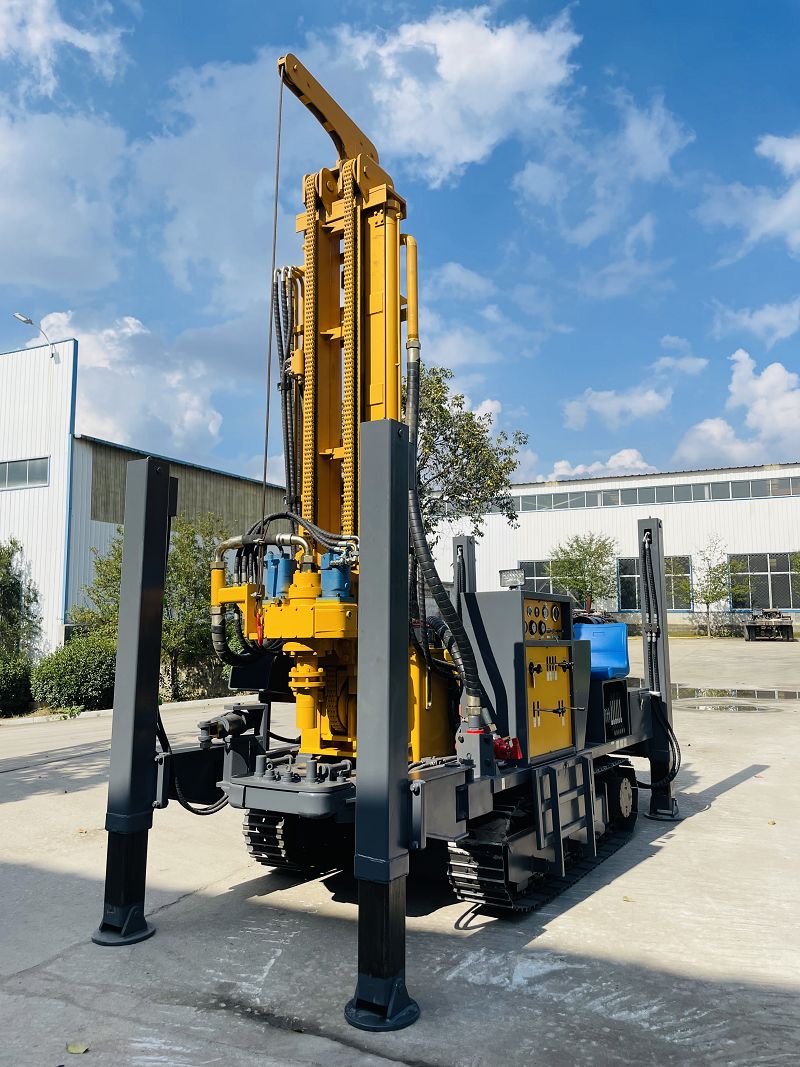
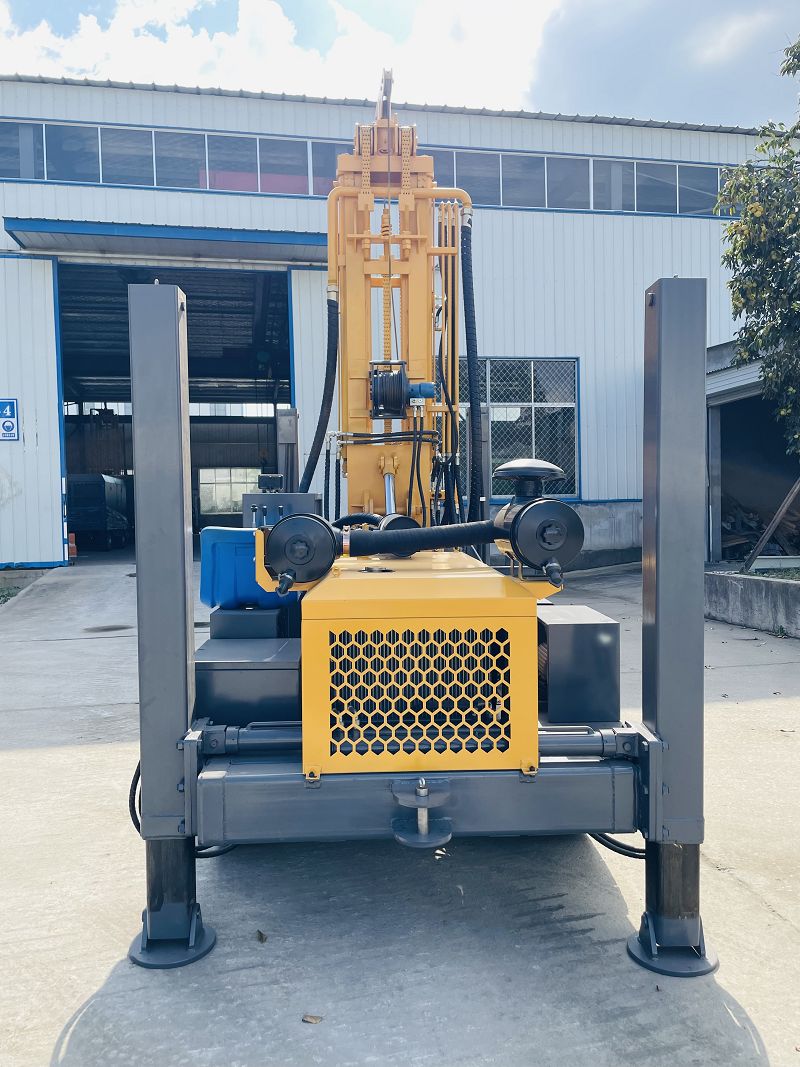
water well drilling rig
I. Overview of the Plan
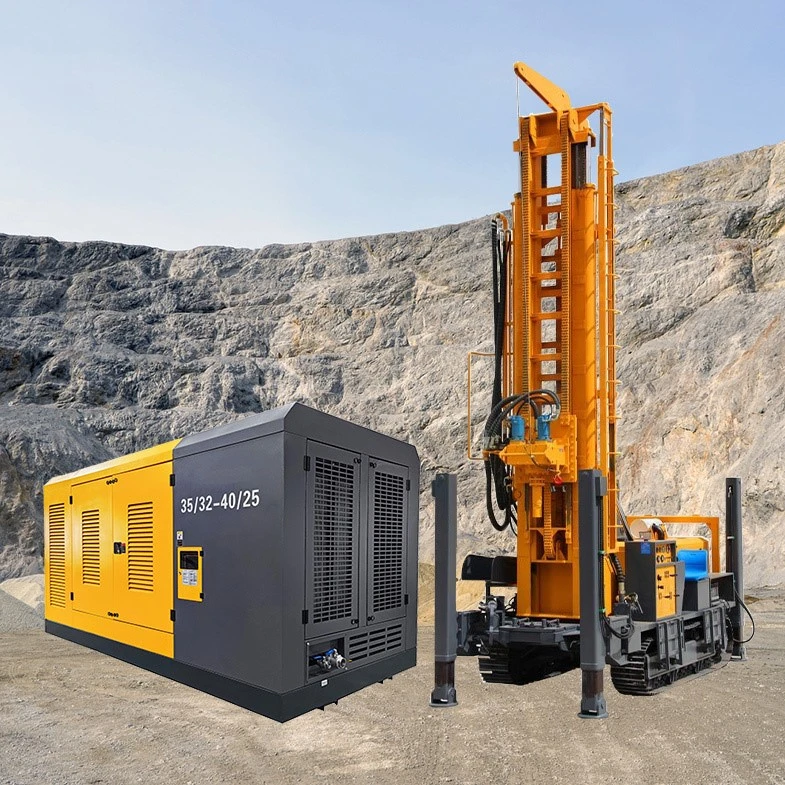
The water well drilling rig machine is a systematic project, and the drilling rig is only one of the core equipment in the operation chain. A highly efficient drilling system requires the scientific combination and coordinated operation of the drilling rig, air compressor, impactor, drill pipe, and drill bit. This plan provides an integrated solution for water well drilling rigs and complete drilling equipment, covering from equipment selection to drilling process matching, and offering one-stop procurement and technical guidance services to customers.

II. Overview of Supporting Equipment
A complete water well drilling system consists of the following five core units:
|
Supporting Unit |
Function Description |
Key Function |
|
Water Well Drilling Rig |
Power platform providing rotary drilling and tripping of drilling tools |
Core master machine of the drilling system |
|
Mobile Air Compressor |
Generates high-pressure air to drive pneumatic drilling tools and remove cuttings |
Power source for DTH hammer drilling |
|
DTH Hammer |
Uses high-pressure air to drive pistons for rock impact crushing |
Critical tool for hard rock drilling |
|
Drill Pipe |
Connects drilling rig with drill bit/hammer to transmit torque and pressure |
Channel for power transmission and flushing medium |
|
Drill Bit |
Directly contacts rock formations to complete rock breaking operations |
Determinant of drilling efficiency |
III. Detailed Explanation of Core Supporting Equipment
1. Water Well Drilling Rig
The borewell drilling rig is the core of the drilling system, responsible for providing rotational torque, pulling-up and lowering drill tools, and the ability to do so.
- Rotary Drilling Rig: Uses the rotation of the drill bit to break rock layers, is the most widely used type currently, suitable for various strata and depths
- Hydraulic power head drilling rig: Hydraulic drive, high drilling efficiency, flexible operation, is the development direction of contemporary well drilling rigs.
- Tractor/cab-mounted drilling rig: Easy to move, suitable for multi-point rotation operations.
2. Mobile air compressors
Compressed air performs three functions in well drilling: driving impacters, clearing rock debris, and stabilizing the borehole wall.
- Mechanism of action: High-pressure gas drives the impactor piston to impact and break rocks, and blows out the rock debris from the borehole.
- Pressure and flow selection: The working air pressure for conventional well drilling is 1.7–2.5 MPa, with a gas consumption of 17–31 m³/min. Higher pressure and flow are required for deep hard rock drilling.
- Power selection: In areas without electricity, diesel drive is selected; in areas with power supply, motor drive can be considered to reduce operating costs.
- Environmental trend: In key domestic areas, strict control has been implemented on non-road machinery emissions. It is recommended to choose models with the national IV emission standard to ensure construction compliance.
3. Submersible impactor (DTH Hammer)
The impactor is a key tool that uses compressed air to drive the piston to frequently impact the drill bit, achieving efficient hard rock crushing.
Classification and selection:
- Low-pressure series (CIR): Working air pressure 0.5–0.7 MPa, suitable for conventional low-pressure drilling rigs, with simple structure and convenient maintenance
- Medium-high pressure series (DHD): Working air pressure 0.56–2.46 MPa, with high drilling efficiency and long component lifespan, is the mainstream choice for well drilling
- Selection principle: Choose the impactor model based on the rock hardness of the stratum. High-pressure impactors with higher pressure are required for hard rock strata; the impactor specification should match the borehole diameter.
4. Drill pipe
The drill pipe is responsible for connecting the drilling rig and the drill bit/impactor, transmitting torque and feed pressure, and transporting compressed air or mud.
- Common specifications: Common drill pipe diameters for well drilling are 76mm, 89mm, etc.
- Type development: From traditional thin-bolt drill pipes to high-strength new types of drill pipes, meeting the needs of deep well drilling and complex strata.
- Matching drilling tools: In addition to drill pipes, auxiliary drilling tools such as drill collars, variable-thread joints, and stabilizers need to be equipped to ensure a reasonable drilling tool combination.
5. Drill bit
The drill bit is the execution tool for directly crushing rocks. The type selection directly affects drilling efficiency and cost.
- Submersible drill bit (hard rock): Used in conjunction with the submersible impactor, suitable for hard rock strata, with fast drilling speed and regular borehole walls. Common specifications include 215mm, 165mm, etc.
- Tongue and cone drill bit (medium-hard strata): Suitable for shale, sandstone, limestone, etc., through the rotation and crushing of the drill bit to break rocks
- PDC drill bit (soft-medium hard strata): Used in conjunction with the mud pump, suitable for loose strata and soft rock drilling, with higher drilling efficiency
IV. Different Well Completion Schemes for Different Strata
|
Formation Type |
Recommended Drilling Rig |
Recommended Air Compressor |
Recommended DTH Hammer |
Recommended Drill Bit |
|
Loose Soil / Sand Layer |
Rotary Drilling Rig |
Medium-low pressure air compressor (12–15 bar) |
Not applicable or light impact type |
PDC / Tricone Drill Bit |
|
Soft to Medium-hard Rock (Shale, Sandstone) |
Rotary Drilling Rig |
Medium-high pressure air compressor (15–20 bar) |
CIR Series Low-pressure DTH Hammer |
Tricone Drill Bit |
|
Hard Rock (Limestone, Granite) |
Full Hydraulic Top Drive Drilling Rig |
High-pressure air compressor (20–25 bar) |
DHD Series High-pressure DTH Hammer |
Spherical Button DTH Bit |
|
Gravel & Pebble Layer / Complex Formation |
Compound / Percussion Drilling Rig |
High-pressure large-displacement air compressor |
High-pressure DTH Hammer |
Combined DTH Bit + Tricone Bit |
V. Selection of Supporting Methods
Method One: Air Drill-in Support (Recommended for Hard Rock)
This method uses a combination of "air compressor + submersible impactor + submersible drill bit + drill pipe" to drive the impactor with compressed air to break hard rock and simultaneously remove debris. The drilling efficiency can reach 5–8 meters per minute, significantly superior to mud drilling, and is the mainstream process for drilling water wells in hard rock.
Method Two: Mud Drilling Support (Recommended for Loose Strata)
This method uses a combination of "mud pump + PDC/toothed drill bit + drill pipe". The mud circulates to cool the drill bit and carry the rock debris to the surface. The equipment cost is relatively low, making it suitable for drilling in loose strata and soft rock.
Method Three: Air + Mud Composite Drilling
In complex strata, air drilling and mud drilling can be flexibly switched according to the changes in the strata, fully leveraging the advantages of both processes to ensure continuous and efficient construction.
Ⅵ.Why Choose Us
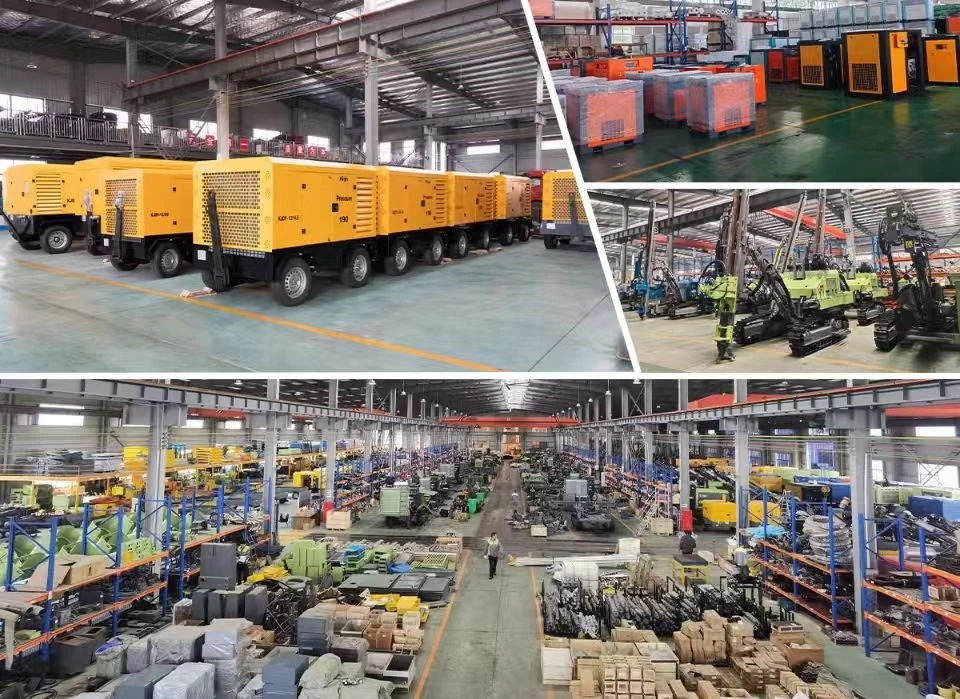
1. Complete equipment is independently manufactured, with no obstacles in the supply chain.
We have the independent production capacity for water well drilling rigs and their related products. Core components such as drill pipes, drill bits, and impacters can all be supplied in a one-stop manner. Customers do not need to negotiate with multiple suppliers separately. From the main unit to the accessories, there is a unified technical standard, eliminating problems such as interface mismatch and high communication costs. The procurement process is simple and efficient.
2. Strict quality control, stable and reliable performance
We hold the ISO9001 certificate. From the entry of raw materials into the factory to the completion of the entire machine, each piece of equipment undergoes strict quality inspection procedures and test runs. Key components are sourced from well-known brands both domestically and internationally, ensuring that the product remains stable and reliable even under harsh outdoor construction conditions, with long service life and low failure rate.
Ⅶ.Contact Us
If you are planning a deep well drilling equipment project or have any questions regarding the supporting solutions for your existing drilling equipment, please feel free to contact us at any time.
We offer a complete service ranging from demand research, geological analysis, equipment selection, scheme design to delivery and commissioning. We can tailor the most cost-effective drilling system solution to suit your drilling depth, geological conditions and budget.
Providing the following information will help us customize the solution for you more quickly:
Planned drilling depth (meters) ;
The main types of strata in the construction area (sand layers/clay layers/rock layers/boulder layers, etc.) ;
Final hole diameter requirement (mm) ;
Whether working in remote areas without electricity ;
Average daily working hours and project duration requirements ;
We are looking forward to cooperating with you and providing a complete and comprehensive solution to meet all your water well drilling needs.