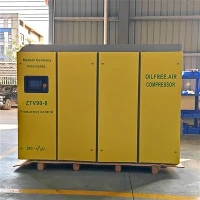
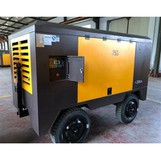
When it comes to rock drill air compressors, one of the most crucial factors that significantly impacts their performance is the size of the compressor. As a seasoned supplier of rock drill air compressors, I've witnessed firsthand how the size of these machines can make or break a project's efficiency and productivity. In this blog post, we'll delve into the intricate relationship between the size of a rock drill air compressor and its performance, exploring the various aspects that are affected by this critical parameter.
Air Delivery Capacity
The size of a rock drill air compressor is directly related to its air delivery capacity, which is typically measured in cubic feet per minute (CFM). In simple terms, the air delivery capacity determines how much compressed air the compressor can supply within a given period. A larger compressor generally has a higher CFM rating, meaning it can deliver a greater volume of compressed air.
For rock drilling operations, having an adequate air delivery capacity is essential. Rock drills require a continuous supply of compressed air to function properly. If the compressor's CFM rating is too low, the drill may not receive enough air to operate at its optimal speed and power, resulting in slower drilling rates and reduced efficiency. On the other hand, a compressor with a sufficiently high CFM rating can ensure that the rock drill has a consistent and powerful air supply, enabling it to penetrate through hard rock formations quickly and effectively.
For example, our W-2.8/5 Diesel 15kw Belt Driven Piston Air Compressor Pneumatic Jack Hammer has a specific CFM rating that is suitable for certain types of rock drilling applications. It's important for customers to consider the air consumption requirements of their rock drills and choose a compressor with an appropriate CFM rating to match those needs.
Pressure Output
In addition to air delivery capacity, the size of a rock drill air compressor also influences its pressure output, measured in pounds per square inch (PSI). The pressure output is crucial because it determines the force with which the compressed air is delivered to the rock drill. A higher PSI means greater force, which can enhance the drill's ability to break through tough rock.


Larger compressors are often capable of generating higher pressures. When dealing with extremely hard rock formations, a rock drill needs a compressor that can provide a high-pressure air supply. A compressor with insufficient pressure may not be able to drive the drill bit with enough force, leading to slow progress and potentially causing damage to the drill equipment.
Our W-3/5 3 Cylinder 5 Bar Small Diesel Piston Type Air Compressor is designed to deliver a specific pressure output that is well-suited for a variety of rock drilling tasks. Customers must assess the pressure requirements of their rock drills and select a compressor that can meet those demands.
Power Consumption and Efficiency
The size of a rock drill air compressor also has a significant impact on its power consumption and overall efficiency. Generally, larger compressors require more power to operate due to their higher air delivery capacity and pressure output. However, this doesn't necessarily mean that larger compressors are less efficient.
In fact, modern large compressors are often designed with advanced technologies that improve their energy efficiency. They may feature variable speed drives, which allow the compressor to adjust its power consumption based on the actual demand for compressed air. This means that the compressor can operate at a lower power level when the demand is low, saving energy and reducing operating costs.
On the other hand, smaller compressors may consume less power, but they may not be able to meet the high air demand of large-scale rock drilling operations. In such cases, multiple small compressors may need to be used in parallel, which can increase the overall complexity and cost of the system.
Our 2V-3.5/5 Mobile Diesel Motor Air Compressor with Piston Head is engineered to balance power consumption and performance, providing an efficient solution for various rock drilling applications.
Portability and Mobility
The size of a rock drill air compressor also affects its portability and mobility. Smaller compressors are generally more portable and easier to move around, making them ideal for small-scale or remote rock drilling projects. They can be easily transported in a vehicle or carried to the job site, allowing for quick setup and operation.
Larger compressors, on the other hand, are often heavier and bulkier, which can make them more difficult to transport. However, they are typically more suitable for large-scale projects where a high volume of compressed air is required continuously. Some larger compressors are designed to be mounted on trailers or trucks, providing a degree of mobility while still offering high performance.
When choosing a rock drill air compressor, customers need to consider the portability requirements of their projects. If the project involves moving the compressor frequently between different locations, a smaller and more portable compressor may be the better choice. However, for stationary or large-scale projects, a larger compressor may be more appropriate.
Noise and Vibration
The size of a rock drill air compressor can also influence the level of noise and vibration it produces during operation. Larger compressors tend to generate more noise and vibration due to their higher power and larger components. This can be a concern, especially in environments where noise and vibration need to be minimized, such as in urban areas or residential neighborhoods.
To address this issue, many manufacturers, including us, design larger compressors with noise and vibration reduction features. These may include soundproof enclosures, vibration isolators, and advanced muffler systems. By investing in a compressor with these features, customers can reduce the impact of noise and vibration on the surrounding environment and the operators.
Choosing the Right Size Compressor
Selecting the right size rock drill air compressor is crucial for achieving optimal performance and efficiency in rock drilling operations. As a supplier, we always recommend that customers consider the following factors when making their decision:
- Rock Drill Requirements: Determine the air consumption and pressure requirements of the rock drill you plan to use. Make sure the compressor you choose can meet or exceed these requirements.
- Project Scale: Consider the size and scope of your rock drilling project. For small-scale projects, a smaller compressor may be sufficient. For large-scale projects, a larger compressor with a higher CFM and PSI rating will likely be needed.
- Portability Needs: Evaluate the mobility requirements of your project. If you need to move the compressor frequently, prioritize portability when choosing a model.
- Power Source and Availability: Consider the power source available at the job site. Compressors can be powered by electricity, diesel, or gasoline. Choose a compressor that is compatible with the available power source.
In conclusion, the size of a rock drill air compressor plays a vital role in determining its performance, efficiency, and suitability for different rock drilling applications. As a trusted supplier of rock drill air compressors, we are committed to providing our customers with high-quality products that are tailored to their specific needs. Whether you're working on a small DIY project or a large commercial construction site, we have the right compressor for you. If you have any questions or need assistance in choosing the right rock drill air compressor, please don't hesitate to contact us. We're here to help you make the best decision and ensure the success of your project.
References
- Compressor Handbook: A Guide to Compressed Air Systems, 3rd Edition.
- Rock Drilling and Blasting Handbook.
- Industry whitepapers on air compressor technology and performance.