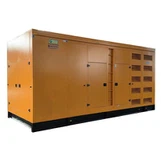
Calculating the load capacity of a diesel generator is a crucial step in ensuring that you select the right generator for your specific needs. As a diesel generator supplier, I've encountered numerous clients who are unsure about how to accurately determine the load capacity required for their applications. In this blog post, I'll guide you through the process of calculating the load capacity of a diesel generator, providing you with the knowledge you need to make an informed decision.
Understanding Load Capacity
Before we dive into the calculation process, it's essential to understand what load capacity means. The load capacity of a diesel generator refers to the maximum amount of electrical power it can supply continuously without overloading. It is typically measured in kilowatts (kW) or kilovolt - amperes (kVA).
The difference between kW and kVA lies in the power factor. The power factor (PF) is a measure of how effectively electrical power is being used. In a purely resistive load (such as a heater), the power factor is 1.0, and kW is equal to kVA. However, in most real - world applications, the power factor is less than 1.0 due to inductive or capacitive loads (like motors). The relationship between kW, kVA, and the power factor is given by the formula: kW = kVA × PF.

Step 1: List All Electrical Devices
The first step in calculating the load capacity of a diesel generator is to list all the electrical devices that will be powered by the generator. Make a comprehensive list, including details such as the name of the device, its power rating (usually found on the device's label), and whether it is a continuous or intermittent load.
Continuous loads are those that run continuously for an extended period, such as lights, refrigerators, and servers. Intermittent loads, on the other hand, operate for short periods, like power tools or air compressors.
Step 2: Determine the Power Rating of Each Device
Once you have your list of electrical devices, you need to determine the power rating of each device. The power rating is usually expressed in watts (W) or kilowatts (kW). If the rating is in watts, you can convert it to kilowatts by dividing by 1000.
For example, if you have a light bulb with a power rating of 100 W, its power in kilowatts is 100/1000 = 0.1 kW.
Step 3: Calculate the Total Load
After determining the power rating of each device, you can calculate the total load. If all the devices will be running simultaneously, you simply add up the power ratings of all the devices.
Let's say you have the following devices:
- A refrigerator with a power rating of 0.5 kW (running continuously)
- A set of lights with a total power rating of 0.2 kW (running continuously)
- A power tool with a power rating of 1.5 kW (intermittent use)
If all these devices are running at the same time, the total load is 0.5 + 0.2+ 1.5 = 2.2 kW.
However, in many cases, not all devices will run simultaneously. You need to consider the duty cycle of intermittent loads. For example, if the power tool is only used 50% of the time, you should only include 50% of its power rating in the total load calculation. So, the adjusted total load would be 0.5 + 0.2+(0.5 × 1.5)= 0.5 + 0.2 + 0.75 = 1.45 kW.
Step 4: Consider the Starting Surge
Some electrical devices, especially motors, require a higher amount of power to start than to run. This is known as the starting surge or inrush current. When calculating the load capacity of a diesel generator, you need to take the starting surge into account.
Motors typically have a starting surge that is 2 - 6 times their running power. For example, if you have a motor with a running power of 1 kW and a starting surge factor of 3, you need to consider 3 kW when calculating the load capacity for the moment when the motor starts.
Step 5: Select the Right Generator
After calculating the total load, including the starting surge, you can select a diesel generator with a load capacity that meets or exceeds your requirements. It's advisable to choose a generator with a slightly higher capacity than your calculated load to account for future expansion or unexpected power demands.
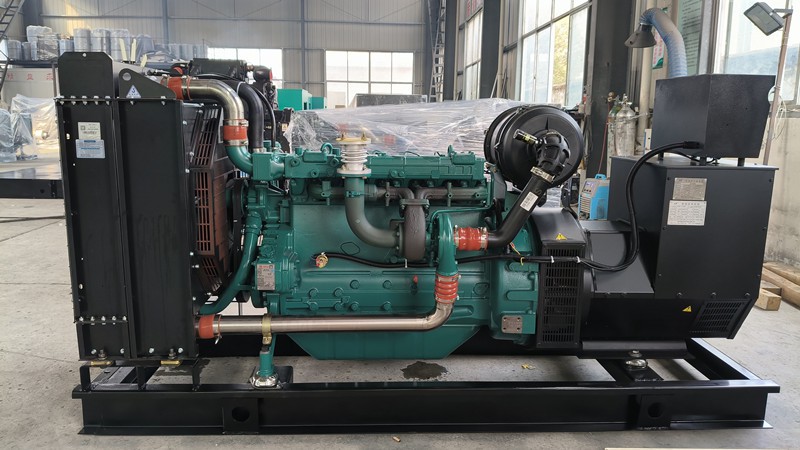
As a diesel generator supplier, we offer a wide range of generators to meet different needs. For example, our 300kw Industrial Water Cooled Open Type Power Diesel Generator is suitable for industrial applications with high - power demands. If you need a more portable and silent option, our ZD - 30 37.5KVA 30KW Portable Silent Diesel Engine Welding Generator Sets is a great choice. And for large - scale power requirements, our ZD - 1000 Silent Diesel Engine Generator Set 1000kw can provide reliable power.
Conclusion
Calculating the load capacity of a diesel generator is a complex but essential process. By following the steps outlined in this blog post, you can accurately determine the load capacity required for your specific application. Remember to consider the power rating of all devices, the duty cycle of intermittent loads, and the starting surge of motors.
If you're still unsure about which diesel generator is right for you, our team of experts is here to help. We can provide you with personalized advice and guidance based on your specific needs. Don't hesitate to reach out to us for more information and to discuss your procurement requirements.
References
- "Electrical Power Systems: Design and Analysis" by Turan Gonen
- "Generator Handbook: Selection, Application, and Maintenance" by U. B. Pandey