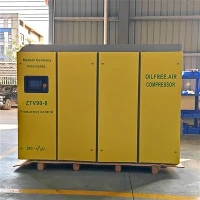
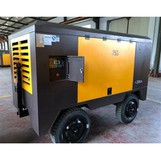
Hey there! As a supplier of screw AC compressors, I know how crucial it is to keep these machines in top - notch condition. One of the most common issues that can pop up is refrigerant leakage. In this blog, I'll share some practical ways to detect refrigerant leakage in a screw AC compressor.
First off, let's understand why detecting refrigerant leakage is so important. Refrigerant is like the life - blood of an AC compressor. It absorbs and releases heat, allowing the compressor to cool the air. A leakage can lead to reduced cooling efficiency, higher energy consumption, and even damage to the compressor itself over time.
Visual Inspection
The simplest way to start the detection process is through a visual inspection. Walk around the screw AC compressor and look for any signs of oil stains or wet spots. Refrigerant often carries a small amount of oil with it, so if there's a leak, you might see oil residue around the joints, valves, or pipes. Check the connections between the compressor and the refrigerant lines. Loose or damaged connections are common spots for leaks.


Also, look for any signs of corrosion on the pipes. Corrosion can create tiny holes through which the refrigerant can escape. If you notice any discoloration or rust on the metal parts, it's a red flag that there could be a problem.
Soap Bubble Test
This is a classic and inexpensive method for detecting refrigerant leaks. All you need is some soapy water and a brush. Mix a small amount of dish soap with water to create a soapy solution. Then, use the brush to apply the solution to the suspected areas of the compressor, such as the joints and valves.
If there's a refrigerant leak, the escaping gas will form bubbles in the soapy water. It's a simple yet effective way to pinpoint the exact location of the leak. Just make sure to dry the areas thoroughly after the test to prevent corrosion.
Electronic Leak Detectors
For a more precise and sensitive detection, electronic leak detectors are a great option. These devices work by sensing the presence of refrigerant in the air. They can detect even the smallest leaks that might be missed by visual inspection or the soap bubble test.
There are different types of electronic leak detectors available. Some use infrared technology, while others use heated diode sensors. When using an electronic leak detector, move it slowly around the compressor and along the refrigerant lines. Pay close attention to the areas where leaks are most likely to occur, such as the compressor housing, fittings, and valves.
Pressure Testing
Pressure testing is another reliable method to detect refrigerant leakage. This involves using a pressure gauge to measure the pressure inside the refrigerant system. First, make sure the compressor is turned off and the refrigerant system is isolated. Then, connect the pressure gauge to the system.
If the pressure drops over time, it's a clear indication that there's a leak. However, this method only tells you that there's a leak somewhere in the system; it doesn't necessarily pinpoint the exact location. You may need to combine pressure testing with other methods to find the source of the leak.
Ultrasonic Leak Detectors
Ultrasonic leak detectors are also useful tools. They work by detecting the high - frequency sound waves produced by the escaping refrigerant. When a refrigerant leaks, it creates a hissing or whistling sound at a frequency that's above the range of human hearing. An ultrasonic leak detector can pick up these sounds and alert you to the presence of a leak.
To use an ultrasonic leak detector, turn it on and move it around the compressor and refrigerant lines. Listen for any beeps or changes in the detector's readings. This method is especially useful for detecting leaks in hard - to - reach areas or in noisy environments.
The Role of Regular Maintenance
Regular maintenance is key to preventing and detecting refrigerant leaks early. As a screw AC compressor supplier, I always recommend scheduling routine maintenance checks. During these checks, a professional technician can perform all the detection methods mentioned above and also check for other potential issues.
For example, they can tighten loose connections, replace worn - out gaskets, and clean the compressor components. By catching leaks early, you can save money on energy bills and avoid costly repairs or replacements down the line.
Our Product Range
We offer a wide range of high - quality screw AC compressors, such as the ZD30 Industrial Screw - air Compressors De Aire Compreso 22kw 30hp, LB20 Energy - saving Mini Rotary Screw Air Compressor 20 Hp 10 Bar, and ZD50 Industrial 37kw 50hp Stationary Variable Speed Rotary Screw Air Compressor. These compressors are designed with durability and efficiency in mind, but like any equipment, they require proper maintenance to perform at their best.
Contact Us for Purchase and Consultation
If you're in the market for a new screw AC compressor or need more information on how to maintain and detect leaks in your existing one, don't hesitate to reach out. We're here to help you make the right choice and ensure that your compressor runs smoothly for years to come.
References
- ASHRAE Handbook - Refrigeration. American Society of Heating, Refrigerating and Air - Conditioning Engineers.
- Compressor Manufacturer's Manuals.