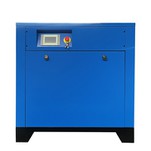
The diesel engine of the screw type air compressor is not providing sufficient power? Check from fuel to turbocharger following these 12 steps.
Common fault phenomena when a diesel engine is in operation include power loss, inability to handle loads, and weak acceleration. The causes are often not complicated, but the troubleshooting requires a systematic approach. Below, in the order of "from outside to inside, from simple to complex", a list of 12 key inspection points is provided.

I. Start with the fuel system
1. Poor fuel quality
Low-quality diesel has high moisture content and contains many impurities, which will directly lead to poor combustion. The old fuel in the fuel tank and pipelines should be drained completely, the oil pipes should be blown clean, and qualified fuel should be replaced.
2. There is air in the fuel system
Air entering the high-pressure fuel line can cause intermittent fuel supply and unstable engine speed. The fuel system needs to be purged. Usually, the air release screws at the fuel pump or fuel injector area should be loosened, and the fuel should be pumped manually until no bubbles are left in the fuel.
3. Fuel pipe and fuel filter blockage
Blockage will cause poor fuel supply. The fuel filter should be replaced and the fuel pipe should be blown clean with compressed air.
4. Fuel return pipe blockage
Poor return of fuel can cause abnormal internal pressure in the system, affecting the fuel injection volume. Check the fuel return pipeline and remove any obstructions.
II. Inspection of Intake and Exhaust and Boost Systems
5. Clogged Air Filter
Insufficient intake air can severely limit power output. Check the air filter element. If it is heavily clogged, clean or replace it.
6. Leakage or throttling of air or fuel pipelines
Loose pipeline joints, flattened pipelines or peeling inner walls will all affect the flow rate. Tighten all joints and replace the damaged sections if necessary.
7. Turbocharger or intake manifold leakage
Leakage will reduce the boost pressure. The intake manifold pressure should be measured. If a leak is detected, the relevant components should be cleaned, repaired or replaced.
8. If the turbocharger has carbon deposits or is scratched
If the rotor does not rotate smoothly, it will reduce the boost efficiency. Disassemble and inspect the turbocharger, remove the carbon deposits, and repair or replace the damaged parts.
III. Fuel Supply and Valve Train
9. Incorrect timing of the fuel injection pump
If the fuel injection advance angle is too large or too small, it will result in a decrease in power. Check and adjust the timing of the fuel injection pump according to the specified method.
10. The fuel injection pump is not functioning properly.
If the plunger or the outlet valve is worn or stuck, it will result in insufficient fuel supply. The fuel injection pump should be removed and tested on the test bench. Depending on the situation, it should be cleaned or repaired.
11. The fuel injector is not functioning properly.
Poor atomization, oil leakage or incorrect opening pressure will affect combustion. Remove the fuel injector and inspect it on the tester. Clean, adjust or replace the fuel injector nozzle assembly.
12. Incorrect valve positioning
Improper valve clearance, bent push rod or failed spring can lead to insufficient intake and exhaust. Check the push rod, spring and valve clearance, and re-adjust as required.
IV. Final Check of Oil Level
13. Excessive Oil Level
An excessively high oil level can increase the resistance in the crankcase and cause the oil to enter the combustion chamber, resulting in poor combustion. Release the excess oil to the normal level.
Follow the above sequence to conduct a thorough investigation one by one. For the vast majority of "insufficient power" issues, the root cause can be identified. The key lies in not skipping steps, not changing components based on intuition, but rather relying on data and observation.