If you've ever driven past a farm after sunset, you've probably noticed the dim, scattered glow of old floodlights stretched across fields-flickering, wasting fuel, and barely keeping up with the work. A few years back, when I was talking to a farmer buddy of mine (I run a hybrid light tower supply company, so I get deep into this kind of on-the-ground talk), he complained about just that: his diesel-only light tower was killing his night shift budget, and the fumes were messing with his sensitive tomato seedlings. That got me thinking: hybrid light towers aren't just for construction sites or concerts, right? Could they actually work for agricultural work? After digging into how these things run, testing them out on a small farm trial last summer, and chatting with a dozen more farmers, I can say-yes, they absolutely can. And here's why that matters way more than you'd think.
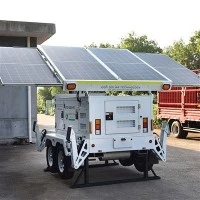
First, let's cut through the "hybrid" marketing fluff. A hybrid light tower is basically a two-part system: solar panels (most on portable, trailer-mounted models) that soak up sunlight, and a backup power source-usually a small, efficient diesel generator or a battery bank, depending on the setup. Unlike old-school diesel towers that chug fuel nonstop, hybrids run on solar whenever the sun's out, only firing up the generator when the sun's gone for days or you need extra juice for heavy-duty equipment. That's the game-changer for farms, which have weird, unpredictable lighting needs, way different from a 9-to-5 construction site.


Let's talk specifics. Farmers don't just light up a flat parking lot at night. They have rows of corn that stretch a quarter-mile long, greenhouse interiors where temperature and light are make-or-break, loading docks where they're loading 50-pound sacks of grain after dark, and sometimes emergency situations-like fixing an irrigation pipe that's burst overnight. A standard construction light tower is too big, too loud, and too thirsty for fuel, which is a huge waste for farms that operate on thin margins. But hybrid models? They're built to flex.
Take, for example, our GTS-1200 Portable Industrial Trailer Type Solar Hybrid Light Tower. We've got one of these out at a 200-acre corn farm in Iowa right now, and the farmer there, Jake, is not the kind of guy to buy new gear just for fun. He told me he's cut his night shift lighting costs by 65% since he swapped out his old diesel tower for it. How? The GTS-1200 has 12 high-efficiency LED lights that cover a 360-degree, 1-acre radius-perfect for checking crop health after sunset, or moving through a field to fix fence lines. It runs entirely on solar during the day, charges a built-in battery that lasts 12+ hours, so he doesn't have to fire up the generator until it's been cloudy for two straight days. No more hauling 50-gallon diesel drums out to the field every week, no more fumes seeping into the corn (Jake swears the old diesel fumes were making his test plots grow 10% slower). That's the kind of math farmers actually care about.
But it's not just field work. Greenhouses are another big one. A lot of specialty crops-like lettuce, tomatoes, or herbs grown for grocery chains-need consistent light levels, even during the shorter winter days or cloudy spells. Traditional greenhouse lighting is usually grid-tied, but if you're a small to mid-sized farm far from the electrical grid, running those lights is expensive. Our UST-900L hybrid solar light towers are made for exactly this kind of off-grid, sensitive setup. They don't blast harsh, flickering light (LEDs are dimmable, remember?), so you can adjust it to match what the crops need-no overloading the plants, no wasting energy. And because they're portable, you can move them from one greenhouse bay to another, or even to a temporary hoop house when you're starting seedlings for spring. One greenhouse owner in Ohio told me he used to pay $1,200 a month to run his grid-tied lights in winter; since he got the UST-900L, that's down to $180 a month (mostly just generator fuel for rare cloudy weeks) and his lettuce yields are up because the light is more consistent. That's a win-win for both his budget and his crops.
Wait, but let's address the big pushback I get from farmers: "What if it's been cloudy for a week straight? What if I need to run a small pump or a tool off it too, not just lights?" That's where the hybrid part really shines. Unlike pure solar towers, hybrids have a backup power source that's not a full generator (which is loud and uses a ton of fuel). Most of our models have a small, Tier 4 final diesel engine-way cleaner than old diesel motors-that only kicks in when the battery is at 20% or lower. And you can adjust the settings, too. If you need extra power for a temporary irrigation pump or a small grain dryer, you can switch the tower to "hybrid mode" and run both the lights and the tool off it, no separate generator needed. The best part? These engines are so quiet-most of our farmers say you can't hear them inside a farmhouse 500 yards away-so you don't have to worry about disturbing livestock or neighboring properties, which was a big problem with old diesel towers. I also did a trial with a vegetable farm in Wisconsin last winter, where we had 10 straight days of overcast skies. The GTS-1200 ran on generator power for only 3 hours total that whole week, because the battery was efficient enough to hold charge even with weak sunlight. No more sitting in the dark waiting for a grid repair, no more spending hundreds on emergency fuel deliveries.
Another underrated benefit: portability. A lot of farms aren't fixed to one spot-you're moving from field to field, setting up for harvest, moving to a new section of the orchard. All of our hybrid light towers are trailer-mounted, so you can hook them up to your farm truck and tow them in 10 minutes. No needing a crane to move a 2,000-pound diesel tower, no disassembling parts every time you switch locations. That's a huge time-saver, especially during harvest season when every minute counts. Jake, the Iowa corn farmer, told me he moved his GTS-1200 three times in one week last summer-from the corn field to the fence line repair, then to the soybean field that needed post-harvest cleanup. No fuss, no extra crew needed to haul it.
But let's be real-this isn't a one-size-fits-all solution. If you're a small hobby farm with a 1-acre vegetable plot, a full hybrid light tower is probably overkill. But if you're a mid-sized to large farm (100+ acres) doing night shifts for harvest, greenhouse operations, or maintenance, it's a game-changer. And even small farms can use them for temporary setups-like setting up a light tower for a weekend harvest that runs late, or for a mobile seed starting operation before you have a permanent greenhouse. The key is matching the model to your needs, not just buying the biggest one on the lot.
I think the biggest misconception out there is that hybrid light towers are just for big construction or mining sites, but that's not true. We've sold models to vineyards in Napa that use them for night harvest (since grapes get damaged if picked in the midday heat), to a fish farm in Florida that uses them for night feeding and pond maintenance, even to a local fairgrounds for their agricultural displays. Farmers are practical people-they don't buy new gear because it's trendy, they buy it because it saves them money, time, and hassle. And that's exactly what hybrid light towers do for agriculture.
If you're a farmer (or a farm manager) reading this, I get it-you're busy, you don't have time to test out a new piece of gear, and you're already stretched thin on budgets. That's why we've worked with dozens of farms to do free, no-obligation trials of our hybrid light towers. We'll drop it off, show you how it works, track your lighting costs for a month, and prove to you that it's not just a fancy gadget-it's a way to cut expenses, get the work done faster, and take the headache out of night shift operations.
At the end of the day, agriculture is all about adapting-dealing with unpredictable weather, fluctuating fuel prices, and tight deadlines. Hybrid light towers aren't a cure-all, but they're one of the most practical, cost-effective adaptations I've seen in a long time. Farmers don't have to choose between cheap, dirty diesel and expensive, inflexible solar anymore. We built these towers to fill that gap, and after seeing the results with the farms we've worked with, I'd say it's time more agricultural operations give them a shot.
If you're curious, reach out to us-we're happy to chat through your specific needs, walk you through how a hybrid light tower could work for your farm, or set up a trial so you can see the savings for yourself. No sales pitches, no jargon, just straight talk about how to make your night shifts a little easier and your budget a little healthier.
References:
- U.S. Department of Agriculture. (2022). Energy Use in U.S. Agriculture. Retrieved from USDA Economic Research Service
- International Energy Agency. (2023). Hybrid Power Systems for Off-Grid Agricultural Applications. Retrieved from IEA Energy for All
- American Society of Agricultural and Biological Engineers. (2021). Lighting Requirements for Field and Greenhouse Agricultural Operations. Retrieved from ASABE Standards Database
- National Agricultural Statistics Service. (2022). Farm Operating Expenses: Fuel, Energy, and Machinery. Retrieved from USDA NASS
-
Explore our hybrid light tower