When it comes to water well drilling, choosing the right drilling rig is crucial for the success of the project. As a water well drilling rig supplier, I often encounter clients who are confused about the differences between rotary water well drilling rigs and percussion water well drilling rigs. In this blog post, I will delve into the characteristics, advantages, and disadvantages of each type, helping you make an informed decision for your water well drilling needs.
Rotary Water Well Drilling Rigs
Rotary water well drilling rigs are one of the most commonly used types in the industry. The basic principle of a rotary drilling rig involves rotating a drill bit at the end of a drill string to break through the rock and soil layers. As the drill bit rotates, it grinds and cuts the material, allowing the drill to penetrate deeper into the ground.
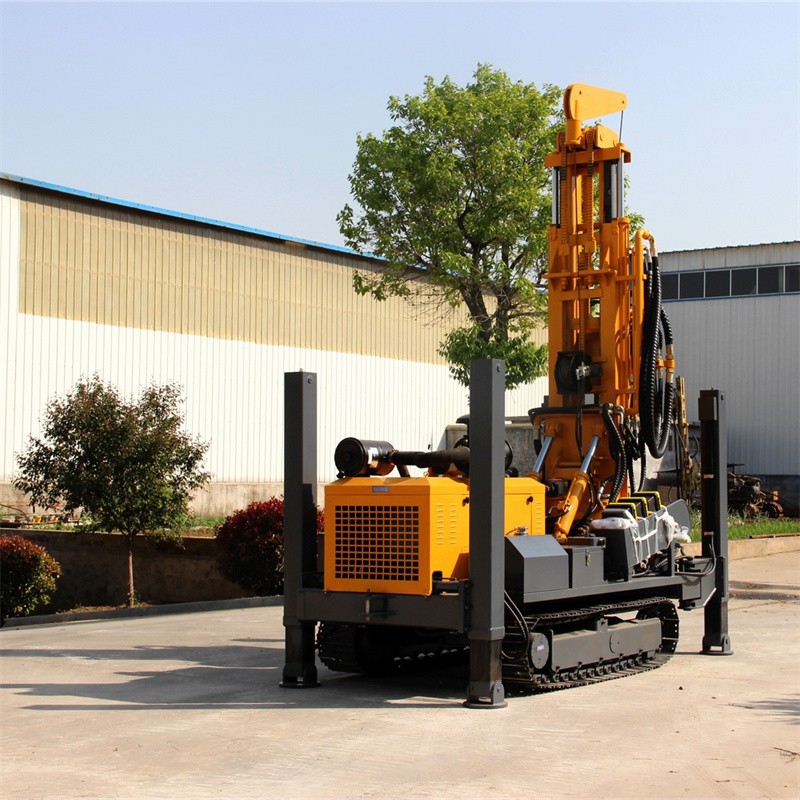
One of the key advantages of rotary drilling rigs is their efficiency in drilling through various types of formations. Whether it's soft soil, hard rock, or a combination of both, rotary rigs can adapt to different geological conditions. They are capable of drilling deep wells with large diameters, making them suitable for commercial and industrial water supply projects. For example, our FY680 High Efficiency Deep Well Drilling Rig Machine is designed to handle deep well drilling with high efficiency, making it an ideal choice for large - scale projects.
Another advantage is the quality of the wellbore. Rotary drilling produces a smooth and uniform wellbore, which is beneficial for installing casing and other well - completion components. This helps to ensure the long - term integrity of the well and reduces the risk of well collapse or water contamination.
However, rotary drilling rigs also have some limitations. They are generally more complex and expensive than percussion rigs. The equipment requires a significant amount of power to operate, which means higher fuel consumption and operating costs. Additionally, rotary drilling rigs are often larger and less portable, making them less suitable for remote or hard - to - reach locations.
Percussion Water Well Drilling Rigs
Percussion water well drilling rigs, also known as cable - tool rigs, operate on a different principle. Instead of rotating the drill bit, percussion rigs use a heavy drill bit that is repeatedly lifted and dropped to break up the rock and soil. The up - and - down motion of the drill bit creates a pounding effect, which fractures the material at the bottom of the hole.
One of the main advantages of percussion drilling rigs is their simplicity. They have fewer moving parts compared to rotary rigs, which means lower maintenance requirements and reduced chances of mechanical failure. This simplicity also makes them more affordable, both in terms of the initial purchase price and long - term operating costs. Our FY260 Best Portable Water Well Drilling Rig Machine with High Quality Parts is a great example of a percussion rig that offers portability and cost - effectiveness, making it suitable for small - scale and rural water well projects.
Percussion rigs are also more portable and easier to transport. They can be set up quickly in remote areas, which is a significant advantage for projects in off - grid locations. They are well - suited for drilling in areas with limited access to power, as they can be powered by small engines or even manual labor in some cases.
On the other hand, percussion drilling has some drawbacks. It is generally slower than rotary drilling, especially when drilling through hard rock. The process of lifting and dropping the drill bit is time - consuming, which can result in longer drilling times and higher labor costs. Percussion drilling also tends to produce a more irregular wellbore, which may require additional work to ensure proper casing installation and well completion.
Comparison of Key Factors
Drilling Speed
As mentioned earlier, rotary drilling rigs are generally faster than percussion rigs, especially in hard rock formations. The continuous rotation of the drill bit allows for a more efficient cutting process, enabling the rig to penetrate the ground at a quicker pace. In soft soil, the difference in speed may be less significant, but rotary rigs still have an edge in terms of overall efficiency.
Cost
In terms of initial cost, percussion rigs are usually more affordable. They require less complex machinery and fewer components, which translates to a lower purchase price. However, when considering long - term operating costs, the situation may be different. Rotary rigs, although more expensive upfront, can be more cost - effective for large - scale projects due to their higher drilling speed and efficiency.
Portability
Percussion rigs have a clear advantage in terms of portability. Their simple design and smaller size make them easier to transport and set up in remote locations. Rotary rigs, on the other hand, are often large and heavy, requiring specialized transportation and a significant amount of time to set up.
Geological Adaptability
Rotary rigs are more adaptable to a wider range of geological conditions. They can handle both soft and hard formations with relative ease, while percussion rigs may struggle in hard rock environments. However, percussion rigs can be effective in certain types of soft soil and unconsolidated formations.

Choosing the Right Rig for Your Project
When deciding between a rotary and a percussion water well drilling rig, several factors need to be considered. First, assess the geological conditions of the drilling site. If the area consists of hard rock or complex formations, a rotary rig may be the better choice. If the soil is soft and the project is in a remote location, a percussion rig could be more suitable.
Next, consider the scale and budget of the project. For large - scale commercial or industrial projects, the higher upfront cost of a rotary rig may be justified by its long - term efficiency. For small - scale or rural projects, a percussion rig can provide a cost - effective solution.
Finally, think about the logistical requirements. If the drilling site is difficult to access, portability becomes a crucial factor. In such cases, a percussion rig may be the more practical option.
Conclusion
In conclusion, both rotary and percussion water well drilling rigs have their own unique advantages and disadvantages. As a water well drilling rig supplier, I understand the importance of choosing the right equipment for each project. Whether you need a high - efficiency deep - well drilling rig like our FY680 High Efficiency Deep Well Drilling Rig Machine or a portable and cost - effective rig like our FY260 Best Portable Water Well Drilling Rig Machine with High Quality Parts, we have the expertise and products to meet your needs.
If you are planning a water well drilling project and need help in selecting the right rig, or if you have any questions about our products, please feel free to contact us. We are here to assist you in making the best decision for your project and ensuring its success.
References
- Drilling Engineering Handbook, various editions
- Water Well Journal, multiple issues discussing different drilling methods and rigs