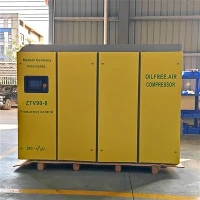
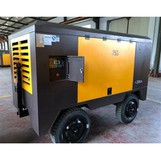
As a supplier of screw air compressors, I've witnessed firsthand the pivotal role that air intake plays in the performance of these machines. Screw air compressors are widely used in various industries, from manufacturing and construction to mining and automotive. Understanding the impact of air intake on their performance is crucial for ensuring optimal operation, efficiency, and longevity.
Air Intake Basics
Before delving into the impact of air intake on screw air compressor performance, it's essential to understand the basic principles of how these compressors work. Screw air compressors operate by trapping air between two meshing helical rotors and reducing the volume of the air as it moves along the rotors. This compression process increases the pressure of the air, which can then be used for various applications.
The air intake system is the first point of contact for the air that will be compressed. It is responsible for drawing in ambient air, filtering it to remove contaminants, and delivering it to the compressor's compression chamber. The quality and quantity of the air intake directly affect the compressor's performance and efficiency.
Impact on Compression Efficiency
One of the most significant impacts of air intake on screw air compressor performance is its effect on compression efficiency. Compression efficiency refers to the ability of the compressor to convert the energy input into compressed air output. A higher compression efficiency means that the compressor can produce more compressed air with less energy consumption.
The temperature and humidity of the intake air play a crucial role in compression efficiency. Hot and humid air contains more moisture, which can increase the energy required to compress the air. Additionally, high temperatures can cause the air to expand, reducing the density of the air and decreasing the amount of air that can be compressed in each cycle. As a result, the compressor has to work harder to achieve the desired pressure, leading to increased energy consumption and reduced efficiency.
To mitigate these issues, it is essential to ensure that the air intake is located in a cool and dry environment. This can be achieved by installing the compressor in a well-ventilated area or using an air intake system with a cooling and dehumidifying function. Additionally, regular maintenance of the air intake filters is crucial to prevent clogging and ensure that the air intake is clean and free of contaminants.
Impact on Air Quality
The quality of the intake air also has a significant impact on the performance and longevity of the screw air compressor. Contaminants such as dust, dirt, oil, and moisture can cause damage to the compressor's internal components, leading to increased wear and tear, reduced efficiency, and potential breakdowns.
Dust and dirt particles can accumulate on the compressor's rotors, bearings, and other moving parts, causing friction and wear. This can lead to increased energy consumption, reduced performance, and premature failure of the compressor. Oil and moisture can also cause corrosion and damage to the compressor's internal components, leading to leaks and reduced efficiency.


To ensure the quality of the intake air, it is essential to use high-quality air intake filters. These filters are designed to remove contaminants from the air before it enters the compressor, protecting the internal components from damage. Additionally, regular maintenance of the air intake filters is crucial to ensure that they are functioning properly and are not clogged with contaminants.
Impact on Noise and Vibration
The air intake system can also have an impact on the noise and vibration levels of the screw air compressor. The intake of air can create turbulence and noise as it passes through the air intake system. Additionally, the vibration of the compressor can be transmitted through the air intake system, causing additional noise and vibration.
To reduce the noise and vibration levels of the compressor, it is essential to use an air intake system with a silencer and vibration isolation features. The silencer is designed to reduce the noise generated by the intake of air, while the vibration isolation features are designed to reduce the transmission of vibration from the compressor to the air intake system.
Impact on System Capacity
The capacity of the screw air compressor system refers to the maximum amount of compressed air that the system can produce. The air intake system plays a crucial role in determining the system capacity. If the air intake system is not capable of delivering enough air to the compressor, the compressor will not be able to operate at its full capacity, leading to reduced performance and efficiency.
To ensure that the air intake system is capable of delivering enough air to the compressor, it is essential to size the air intake system correctly. This involves calculating the required air flow rate based on the compressor's specifications and the application requirements. Additionally, it is important to ensure that the air intake system is not restricted by any obstacles or blockages, such as filters that are clogged with contaminants.
Case Studies
To illustrate the impact of air intake on screw air compressor performance, let's take a look at some real-world case studies.
Case Study 1: Mining Operation
In a mining operation, a ZD-20/20 Diesel Rotary Type Screw Air Compressor 20 Bar for Mining Operation was experiencing reduced performance and increased energy consumption. After a thorough inspection, it was found that the air intake system was located in a dusty and hot environment, and the air intake filters were clogged with dust and dirt. As a result, the compressor was having to work harder to draw in the required amount of air, leading to increased energy consumption and reduced performance.
To address this issue, the air intake system was relocated to a cooler and cleaner area, and the air intake filters were replaced with high-quality filters. Additionally, a pre-filter was installed to further protect the air intake filters from dust and dirt. After these modifications, the compressor's performance improved significantly, and the energy consumption was reduced by approximately 15%.
Case Study 2: Construction Site
On a construction site, a ZD-10/10 375 Cfm Diesel Portable Screw Air Compressor Machine For Mining was experiencing excessive noise and vibration. After a detailed analysis, it was determined that the air intake system was not properly designed to reduce noise and vibration. The air intake was located close to the compressor, and there was no silencer or vibration isolation features installed.
To solve this problem, a new air intake system was installed with a silencer and vibration isolation features. The air intake was also relocated to a more suitable location away from the compressor. After these changes, the noise and vibration levels of the compressor were significantly reduced, creating a more comfortable working environment for the operators.
Case Study 3: Small-Scale Manufacturing
In a small-scale manufacturing facility, a ZD-5/8 185CFM Small Portable Diesel Screw Air Compressor On Wheels was not able to meet the production requirements. The system capacity was lower than expected, and the compressor was running at a higher pressure than necessary. After an investigation, it was discovered that the air intake system was undersized, and there were some restrictions in the air intake piping.
To rectify the situation, the air intake system was upgraded to a larger size, and the piping was redesigned to eliminate any restrictions. After these improvements, the compressor was able to operate at its full capacity, and the production requirements were met without any issues.
Conclusion
In conclusion, the air intake has a profound impact on the performance of a screw air compressor. It affects compression efficiency, air quality, noise and vibration levels, and system capacity. As a supplier of screw air compressors, we understand the importance of ensuring that the air intake system is properly designed, installed, and maintained.
By taking the necessary steps to optimize the air intake, such as locating it in a cool and dry environment, using high-quality air intake filters, and ensuring that the system is properly sized, you can significantly improve the performance, efficiency, and longevity of your screw air compressor.
If you are in the market for a screw air compressor or need assistance with optimizing the air intake system of your existing compressor, we are here to help. Our team of experts has extensive experience in the field and can provide you with the best solutions tailored to your specific needs. Contact us today to start a discussion about your requirements and explore how we can help you achieve optimal performance from your screw air compressor.
References
- "Compressed Air Systems Handbook" by the Compressed Air and Gas Institute.
- "Screw Compressor Technology" by Heinz P. Bloch and Fred K. Geitner.
- Various technical papers and research articles on screw air compressor performance and air intake systems.