Directional drilling is a specialized technique that has revolutionized various industries, including oil and gas exploration, mining, and geothermal energy production. At the heart of this sophisticated process lies the drill pipe, a seemingly simple yet crucial component that plays a multifaceted role. As a drill pipe supplier, I have witnessed firsthand the significance of these pipes in ensuring the success of directional drilling operations. In this blog, I will delve into the various roles of drill pipe in directional drilling, highlighting its importance and the different types available in the market.
The Foundation of Directional Drilling: Structural Integrity
One of the primary roles of drill pipe in directional drilling is to provide structural support. The drill pipe serves as a conduit that connects the drilling rig at the surface to the drill bit deep underground. It must be able to withstand the immense forces exerted during the drilling process, including tension, compression, torsion, and bending. These forces can be particularly significant in directional drilling, where the drill path is not straight but rather follows a pre - determined curve or angle.
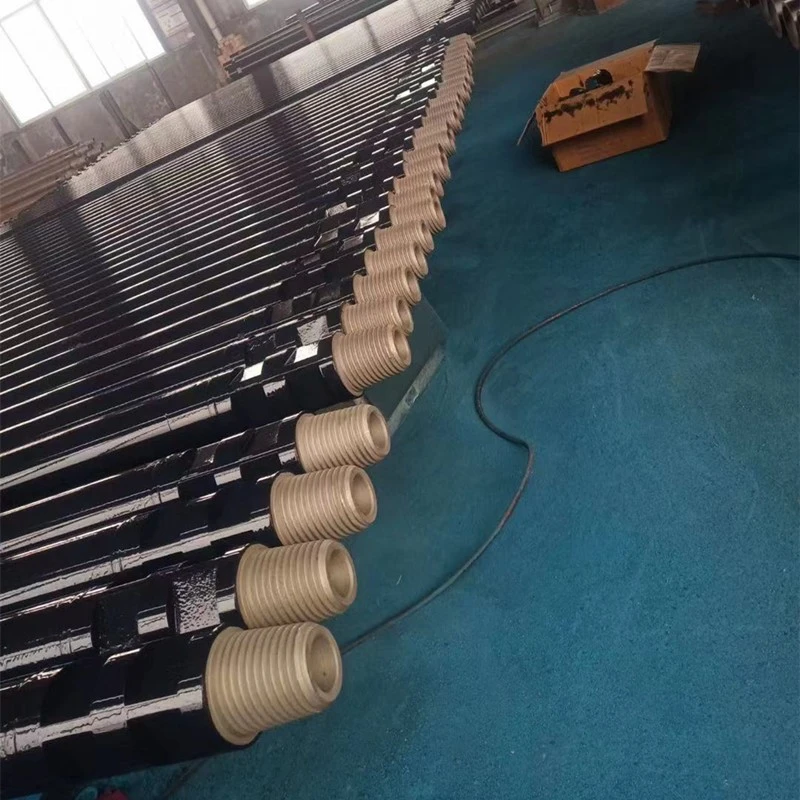
The drill pipe's ability to maintain its structural integrity is essential for preventing failures that could lead to costly downtime and safety hazards. High - quality drill pipes are typically made from premium steel alloys that are heat - treated to enhance their strength and toughness. For example, the ZD - 89 DTH 89mm Drilling Rig Rod Pipe is designed with a robust structure that can endure the rigors of directional drilling. Its precise dimensions and high - strength material ensure that it can transmit the necessary torque and weight to the drill bit while maintaining its shape and integrity.

Transmission of Power and Torque
Another critical role of the drill pipe is to transmit power and torque from the surface to the drill bit. In directional drilling, the drill bit needs to rotate at a specific speed and with sufficient force to cut through various rock formations. The drill pipe acts as a mechanical link that transfers the rotational energy generated by the drilling rig's motor to the drill bit.
This power transmission is a complex process that requires the drill pipe to have low friction and high torsional strength. A smooth internal surface of the drill pipe reduces energy losses due to friction, allowing more power to reach the drill bit. Additionally, the pipe's ability to resist torsional forces ensures that it does not twist or break under the high - torque loads. The Tapered Drill Pipe Rod 1.5m for Jack Hammer Use is engineered to optimize power transmission. Its tapered design allows for efficient coupling and uncoupling, facilitating the smooth transfer of torque along the drill string.
Circulation of Drilling Fluids
Drilling fluids, also known as drilling muds, play a vital role in directional drilling. They are used to cool and lubricate the drill bit, remove cuttings from the wellbore, and maintain wellbore stability. The drill pipe serves as a channel for the circulation of these fluids.
The drilling fluid is pumped down through the inside of the drill pipe to the drill bit. As it reaches the bit, it cools the cutting surfaces and helps to break up the rock. The fluid then carries the cuttings back up to the surface through the annulus between the drill pipe and the wellbore wall. This continuous circulation is essential for preventing the accumulation of cuttings, which could cause the drill bit to overheat and wear out prematurely.
The drill pipe's internal diameter and wall thickness are carefully designed to ensure efficient fluid flow. A proper flow rate and pressure of the drilling fluid are maintained to optimize the cleaning and cooling processes. High - quality drill pipes are resistant to corrosion and erosion caused by the drilling fluids, ensuring a long service life and reliable fluid circulation.
Steering and Directional Control
In directional drilling, the ability to control the direction of the drill bit is of utmost importance. The drill pipe plays a key role in this process by providing a stable platform for steering tools. Specialized steering tools, such as mud motors and rotary steerable systems, are installed along the drill string to adjust the direction of the drill bit.
The drill pipe's stiffness and flexibility characteristics are crucial for effective steering. It needs to be stiff enough to transmit the steering forces accurately but flexible enough to follow the curved path of the wellbore. Advanced drill pipe designs incorporate features that enhance their steering capabilities, allowing for precise control over the drilling direction.
Adaptability to Different Formations
Directional drilling often involves encountering a variety of rock formations, each with its own unique properties. The drill pipe must be adaptable to these different conditions. For example, in hard rock formations, the drill pipe needs to have sufficient strength to withstand the high - impact forces generated during drilling. In soft or unconsolidated formations, it should be able to prevent excessive bending and buckling.
As a drill pipe supplier, we offer a range of drill pipes that are tailored to different formation types. Our experts can help customers select the most suitable drill pipe based on the specific geological conditions of their drilling project. This ensures that the drill pipe can perform optimally and contribute to the overall success of the directional drilling operation.
Conclusion
In conclusion, the drill pipe is an indispensable component in directional drilling. Its roles in providing structural support, transmitting power and torque, circulating drilling fluids, enabling steering and directional control, and adapting to different formations are all crucial for the success of the drilling process.
If you are involved in a directional drilling project and are in need of high - quality drill pipes, I encourage you to reach out to us. Our team of professionals is dedicated to providing the best drill pipe solutions to meet your specific requirements. We understand the challenges of directional drilling and are committed to helping you achieve your project goals efficiently and safely. Contact us today to discuss your procurement needs and start a fruitful partnership.
References
- American Petroleum Institute (API). API Spec 5DP, Specification for Drill Pipe.
- Society of Petroleum Engineers (SPE). Drilling Engineering Handbook.
- National Drilling Association. Guidelines for Directional Drilling Operations.