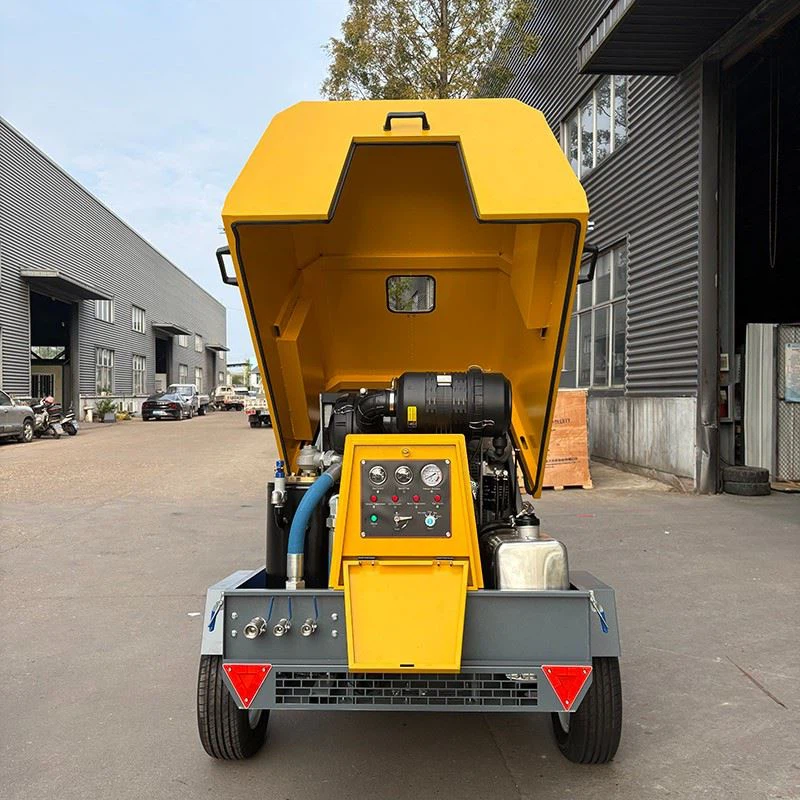
In modern industrial, mining, and construction operations, screw air compressors serve as indispensable power sources. As an established industrial equipment manufacturer with a track record of delivering reliable air power solutions globally, Moderate Machine recognizes that operational safety is paramount to maximizing machine lifespan and protecting your workforce. This comprehensive guide outlines the essential safety precautions required when operating industrial screw air compressors.

1. Pre-Operational Inspection Sequences
Before initiating a screw air compressor, executing a rigorous pre-operational inspection is critical to prevent mechanical failure and safety hazards.
Visual Inspection: Thoroughly inspect the compressor's exterior for structural anomalies, including housing cracks, loose mechanical fasteners, or compromised/frayed electrical wiring.
Fluid Level Fluidity: Check the compressor oil levels. Operating with insufficient lubrication causes extreme thermal expansion, internal friction, and premature wear of the rotary screw rotors. Always maintain fluid levels according to the specified manufacturer manual.
Air Filtration Integrity: Examine the air intake filter. A clogged filter restricts necessary airflow, forcing the compressor to overwork, reducing efficiency, and triggering potential overheating. For example, when utilizing high-duty mobile units like our 185CFM Portable Diesel Screw Air Compressor On Wheels, regular filter sanitation is vital for maintaining optimal field performance.
Safety Device Verification: Ensure all mechanical safety relief valves and electronic emergency stop buttons are fully operational. Safety relief valves prevent catastrophic over-pressurization by automatically bleeding off excess system pressure, while emergency stops must remain unblocked and instantly accessible.
2. Proper Installation and Spatial Placement
The physical placement and foundational stability of a screw air compressor directly impact its operational safety footprint.
Surface Stability: Install the compressor setup on a level, solid, and vibration-dampening foundation. Uneven positioning induces harmonic vibrations that loosen critical internal couplings and pipe joints.
Ventilation & Thermal Management: Ensure the installation environment features high-volume ventilation. Screw air compressors generate substantial heat during the air compression cycle; adequate cross-ventilation is mandatory to dissipate thermal loads and avert high-temperature auto-shutdowns.
Combustion and Hazardous Materials Isolation: Maintain strict clearance zones between the compressor and any volatile or flammable materials. Diesel-powered equipment, such as our Energy Efficient Diesel Rotary Screw Air Compressors for Mining, houses internal combustion engines that can emit exhaust heat or microscopic sparks, requiring strategic isolation from hazardous zones.
Maintenance Clearance: Leave adequate, unobstructed peripheral clearance around all sides of the compressor housing to allow maintenance engineers to safely conduct routine servicing and component inspections.
3. Industrial Electrical Safety Protocols
For electric-driven screw air compressors, strict adherence to national electrical codes prevents severe workplace shocks and electrical fires.
System Grounding: Ensure the machine is coupled to a properly grounded industrial electrical supply to safely redirect fault currents in the event of a short circuit.
Power Cord & Cable Audits: Regularly inspect heavy-duty power lines for mechanical cuts, structural insulation degradation, or exposed copper conductors. Damaged power cables pose immediate electrocution and arc-flash hazards and must be replaced instantly.
Circuit Load Prevention: Verify that your facility's electrical distribution system and breakers can accommodate the high starting current (inrush current) and continuous full-load amperage of the electric compressor.
4. Standard Operating Procedures (SOPs)
Operating screw air compressors within their engineered threshold parameters prevents catastrophic mechanical stress.
Operational Boundary Adherence: Never exceed the maximum rated working pressure (PSI/Bar) and temperature limitations defined by the manufacturer. Over-pressurizing vessels or running at extreme temperatures risks structural metal fatigue.
Continuous Telemetry Monitoring: Routinely log and monitor operational parameters via the control panel. Pay close attention to unusual acoustic signatures, structural vibrations, sudden pressure drops, or spikes in discharge temperature. At any sign of telemetry abnormality, execute an immediate shutdown sequence for technical investigation.
Gradual Load Initialization: Avoid abrupt loading cycles upon startup. Gradually introduce operational load parameters to ease structural stress on the screw elements, bearings, and drive couplings.
5. Preventive Maintenance and Servicing Intervals
Structured preventive maintenance schedules are crucial to preserving the operational integrity and overall safety factor of the machine.
Lubricant and Filter Lifecycles: Discard and replace compressor oil at recommended operational hourly intervals. Degraded oil loses its shear stability and lubricating properties, accelerating rotor wear. Air-oil separators and filtration elements must be replaced periodically to maintain clean compressed air discharge and prevent fluid carryover.
Certified Technical Audits: Schedule periodic, comprehensive diagnostic checkups conducted by certified mechanical technicians to evaluate internal valve tolerances, rotor alignment, and pressure vessel integrity before latent micro-faults develop into severe system failures.
6. Personal Protective Equipment (PPE) Requirements
Personnel operating or working within the immediate perimeter of an active screw air compressor installation must wear certified personal protective equipment:
| PPE Item | Protection Objective |
| Industrial Safety Glasses | Protects ocular region from airborne particulate matter, high-pressure dust, or flying debris. |
| Acoustic Ear Protection (Muffs/Plugs) | Mitigates high-frequency decibel noise generated by heavy-duty air compression, preventing long-term hearing degradation. |
| Heavy-Duty Mechanics Gloves | Safeguards hands from high-temperature exhaust manifolds, thermal compressor piping, and sharp metal edges during inspections. |
| Non-Slip Steel-Toe Boots | Prevents crush injuries from heavy maintenance tooling and provides traction against potential oil-slicked surfaces. |
7. Compressed Air Management Hazards
Pneumatic energy can cause severe bodily injury if handled carelessly.
Directional Safety: Never direct a high-pressure compressed air stream toward yourself or other warehouse personnel. Compressed air can breach human skin, causing fatal air embolisms, severe ocular injuries, or deep tissue damage.
Pneumatic Tool & Hose Integrity: Ensure all connected downstream air tools, air hoses, and whip checks are rated for the compressor's maximum discharge pressure. Inspect flexible hoses for bubbling, outer abrasion, or leakage prior to pressurization. A ruptured high-pressure hose can whip violently, leading to catastrophic workplace trauma.
8. Facility Emergency Preparedness
Emergency Stop Accessibility: All operators must be trained on the exact location and deployment of the emergency stop mechanisms.
Fire Suppression Readiness: Position functional, rated fire extinguishers (such as ABC-dry chemical or CO2 models suitable for electrical and fuel fires) in clear view within the compressor enclosure.
First-Aid Training: Keep a fully stocked industrial first-aid kit nearby, and ensure field personnel are trained in handling high-pressure air punctures and thermal burn injuries.
Conclusion
Adhering to rigorous safety parameters guarantees that your industrial air compression infrastructure runs at peak efficiency while completely eliminating avoidable workplace accidents. At Moderate Machine, our heavy-duty screw air compressors are engineered with multi-tiered safety systems, integrated thermal cutoffs, and structural over-pressure protection to safeguard your operators and operations.
Whether your job site requires heavy-duty diesel mobile power for remote mining or stationary electric systems for manufacturing plants, we provide high-performance solutions engineered for the toughest environments. Contact our technical sales division today to request detailed technical parameters, commercial pricing, or custom configuration consulting.
Explore our Screw Air Compressors →
References
ISO 12100: Safety of Machinery - General Principles for Design, International Organization for Standardization.
OSHA Compressed Air Guidelines & Standard 1910.242, Occupational Safety and Health Administration.
Moderate Machine Technical Operational & Maintenance Manuals for Screw Air Compressors.