In industrial procurement, selecting a screw air compressor is a major capital investment that directly impacts operational overhead. As an established industrial equipment manufacturer, Moderate Machine has deep insights into the pricing structures of the compressed air market. Rather than chasing extreme, over-engineered metrics or risking low-tier, high-failure equipment, understanding what drives the cost of these machines enables buyers to achieve the optimal balance between performance and long-term operating costs.
In this comprehensive analysis, we will break down the key factors that determine the pricing of industrial screw air compressors to guide your procurement strategy.

1. Brand Engineering and Manufacturing Reputation
One of the most prominent variables driving the price of a screw air compressor is the brand's engineering pedigree and market reputation.
Leading manufacturers with rigorous quality control infrastructures and heavily funded R&D divisions naturally command higher pricing. These established brands offer significant risk mitigation through advanced rotor profile designs, robust structural housing, and long operational lifespans.
When investing in a trusted brand, global buyers are paying for peace of mind, continuous factory support, and international quality management certifications, such as ISO 9001. Conversely, unbranded or lower-tier units may feature lower initial price tags but often carry higher long-term risks due to frequent breakdowns and poor component tolerances.
2. Volumetric Capacity and Pressure Ratings (CFM & PSI)
The physical performance capability of a rotary screw compressor-quantified by its volumetric flow rate in Cubic Feet per Minute (CFM) and working discharge pressure in Pounds per Square Inch (PSI)-has a direct, proportional impact on price.
Compressors engineered for higher CFM and PSI thresholds require larger air ends (rotors), heavy-duty drive motors, and reinforced internal pipe networks.
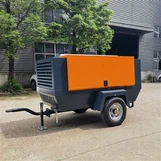
Heavy-Duty Applications: High-capacity units, such as our 375 CFM Diesel Portable Screw Air Compressor Machine, are engineered specifically for demanding environments like mining and heavy tunneling where massive air volume is mandatory to power large pneumatic tools.
Light-to-Medium Duty Applications: For more compact operations, a lower-capacity configuration like our 185CFM Small Portable Diesel Screw Air Compressor On Wheels delivers a more localized air supply at a lower production and procurement cost.
3. Energy Efficiency and Drive Technology
With energy consumption representing over 70% of an industrial air compressor's total lifetime cost of ownership, energy efficiency heavily influences pricing.
Advanced compressors utilize Variable Speed Drive (VSD) technology, which automatically throttles the motor speed up or down to precisely match real-time compressed air demands.
Fixed Speed Compressors: Feature lower upfront costs but operate at a constant speed, consuming higher amounts of electricity or diesel during periods of low air demand.
VSD / Energy-Efficient Compressors: Require a higher initial capital expenditure due to advanced electronic inverters and smart control systems. However, the subsequent reduction in fuel or power consumption routinely offsets the premium within the first few years of field operation.
4. Design Architecture and Component Build Quality
The structural integrity and choice of internal components heavily differentiate premium screw air compressors from budget alternatives.
Heavy-duty, job-matched machines are designed to withstand extreme thermal environments, humid mining shafts, and highly corrosive coastal conditions. High-quality materials like heavy-gauge steel for enclosures, specialized anti-corrosion coatings, and world-class engine integrations (such as premium Cummins engines for diesel units) raise the manufacturing cost but guarantee continuous operation.
Furthermore, the design of the internal cooling system-such as enlarged radiator surface areas and optimized cooling fan pitches-prevents high-temperature emergency shutdowns, directly protecting the machine's critical air end from thermal deformation.
5. Integrated Air Purification and Smart Control Modules
The inclusion of auxiliary downstream components and advanced electronics will increase the total price of a screw air compressor assembly:
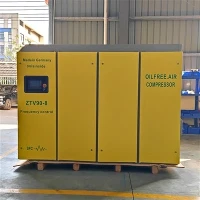
Air Treatment Accessories: Built-in refrigerated air dryers, pre-filters, and oil-water separators increase pricing but are essential for industries requiring dry, contaminant-free compressed air (such as food processing, precision painting, or auxiliary tunnel drilling).
Smart Telemetry Controls: Integrated PLC systems and remote IoT monitoring options allow facility engineers to track discharge temperatures, pressures, and maintenance intervals in real time. These smart additions add upfront cost but protect against catastrophic component failures through predictive maintenance alerts.
6. Global Macroeconomic and Market Conditions
Screw air compressor pricing is never completely static; it is heavily influenced by international supply chains and commodity markets:
Raw Material Fluctuations: Structural shifts in the global pricing of industrial metals, specifically high-grade steel for frames and copper for electric motor windings, directly affect manufacturing overhead.
Supply Chain Logistics: Port congestion, container availability, and international shipping rates from industrial manufacturing hubs to regions like South America, Africa, or Southeast Asia play a decisive role in the final landed cost for the importer.
7. Preventive Maintenance Lifecycle and Spare Parts Availability
When evaluating prices, experienced procurement officers focus on the Total Cost of Ownership (TCO) rather than just the initial purchase price.
A compressor designed with common, highly interchangeable consumable parts (such as standard air/oil filters and separator elements) will drastically reduce long-term operational costs. At Moderate Machine, we prioritize a "sensible and balanced" layout, avoiding overly complex, proprietary configurations to ensure that routine maintenance can be executed quickly with widely available parts, minimizing costly project downtime.
Conclusion
Ultimately, the price of a screw air compressor reflects its capacity, technology, component durability, and the engineering depth behind its manufacturing process. When procuring an air power system, it is vital to balance your immediate budget constraints with your long-term operational efficiency goals.
At Moderate Machine, we specialize in designing and manufacturing screw air compressors that achieve the perfect, pragmatic midpoint-delivering rugged durability, high efficiency, and reliable field lifespans without over-engineering or cutting corners. With an active market footprint spanning over 50 countries, we provide job-matched engineering solutions tailored to your exact industry criteria.
Contact our technical sales team today to receive complete technical parameters, specific model pricing, and localized shipping details for your next project.
Explore our Screw Air Compressors →
References
CAGI (Compressed Air and Gas Institute) Performance Verification Standards.
ISO 1217: Displacement Compressors - Acceptance Tests, International Organization for Standardization.
Moderate Machine Global Industrial Procurement and Maintenance Technical Manuals.