


In modern commercial, residential, and industrial power supply scenarios, noise pollution from traditional power equipment has become a key pain point restricting application scenarios. As a mainstream low-noise power solution, the silent diesel generator has gradually replaced ordinary open-type units, becoming the preferred choice for backup power in hospitals, construction sites, shopping malls, and residential areas. Many users wonder about the core logic of silent diesel generator noise reduction. In fact, soundproof diesel generator sets achieve efficient noise control through a set of systematic acoustic optimization designs targeting multiple noise sources of diesel engine generator set.
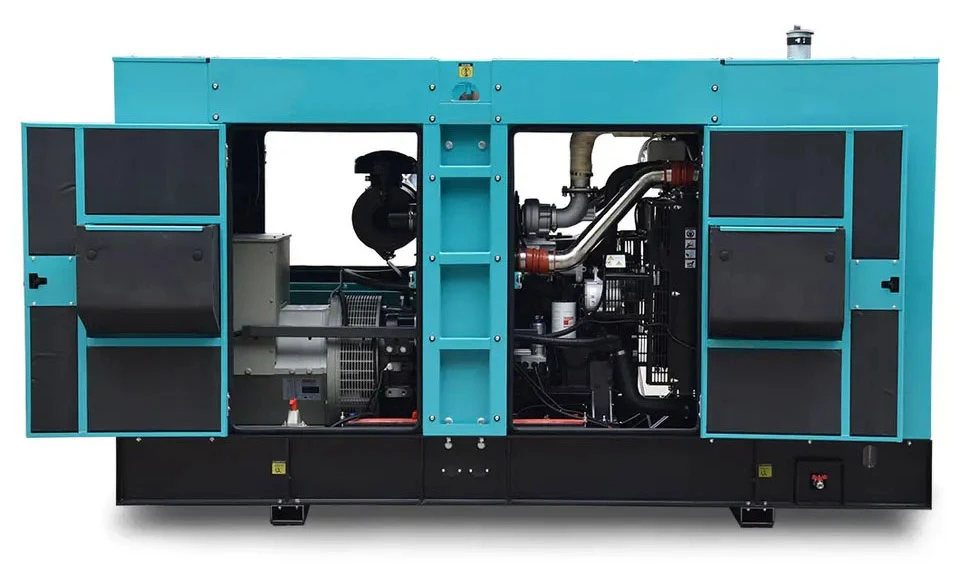
The noise of a traditional diesel generator mainly comes from four core sources: engine mechanical operation noise, fuel combustion vibration noise, exhaust gas pulsation noise, and cooling air duct airflow noise. Ordinary open units lack noise suppression structures, resulting in operating noise up to 100dB or higher, which seriously disturbs the surrounding environment. Silent diesel generators adopt targeted technical upgrades for all noise generation links to achieve ultra-low noise operation.
The most intuitive and core noise reduction configuration is the fully enclosed acoustic soundproof canopy. Different from ordinary simple casings, professional soundproof diesel generator canopies adopt a composite multi-layer acoustic structure. The outer layer is a high-strength thick steel plate, which forms a physical barrier to block the outward transmission of high-decibel noise. The inner layer is paved with high-density sound-absorbing materials such as rock wool and glass fiber, matched with perforated metal plates. This structure converts internal sound energy into heat energy consumption, effectively absorbing high and medium-frequency noise and avoiding sound reflection and superposition inside the cabin.
To solve the noise leakage problem of air intake and heat dissipation openings, silent diesel generator sets are equipped with optimized labyrinth duct structures. The traditional straight air duct is a direct channel for noise outward diffusion, while the labyrinth air intake and exhaust duct uses multi-angle baffles and curved channels. It ensures unobstructed ventilation and heat dissipation required for unit operation, while cutting off the direct propagation path of noise, greatly reducing airflow noise and equipment operating noise leakage.
The multi-stage exhaust silencer system is another key noise reduction technology. Diesel engine exhaust pulsation is the main source of low-frequency noise. Advanced silent generators are equipped with composite mufflers with multi-chamber and baffle structures, which weaken exhaust gas pressure fluctuations step by step, eliminate sharp exhaust noise, and reduce low-frequency vibration noise transmitted outward through the exhaust pipeline.
In addition, vibration isolation and damping design lay a solid foundation for overall noise reduction. The unit is installed with high-efficiency shock absorbers at the bottom, which isolates the mechanical vibration generated by engine operation from the ground and the canopy, avoiding secondary noise pollution caused by vibration resonance. Optimized tuning of the engine combustion chamber and piston structure also reduces mechanical clatter from the source.
At present, mature silent diesel generator noise reduction technologies can control the operating noise of diesel engine generator sets within 60-75dB at a 7-meter distance, fully meeting environmental protection and urban power supply standards. With the upgrading of environmental protection policies and the expansion of civilian power demand, systematic acoustic optimization technology will further iterate, making soundproof diesel generators more adaptable to diversified low-noise power supply scenarios.
Explore our silent diesel generator


