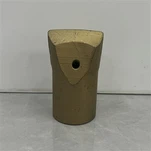
In mining tunnels, railway tunnels or water conservancy projects, that crisp "tap-tap-tap" sound is often the strongest heartbeat of the project progress. As the most traditional yet reliable tool for stone excavation, the pneumatic portable rock drill is still playing an indispensable role in various rock and soil engineering projects to this day.
However, when faced with a wide variety of rock drill models (such as YO18, YT24, YT27, YT28, 7665, etc.) on the market, how to choose an equipment that is both economical and efficient, as well as durable and reliable, is often a headache for many purchasers and project managers. Choosing an overly small model leads to low efficiency and project delays; choosing an overly large model results in energy waste and capital accumulation. Therefore, we can make the selection from the following aspects:


1. Define the working conditions: Determine the type based on the "support method"
The classification of pneumatic rock drills is, first of all, determined by their "frame". Depending on the different support methods, the market mainly consists of four types, and which one to choose entirely depends on your working surface:
Handheld rock drill: It is relatively lightweight (usually under 25kg) and is supported by human force. Due to the significant physical exertion of the operator and the relatively low impact energy and torque, it is only recommended for use in scattered projects involving a small number of shallow holes, downward or horizontal drilling. For modern mines and large tunnels, it is gradually being marginalized.
Air-leg rock drill: This is currently the most widely used "all-rounder". It is equipped with a telescopic air leg as a support, effectively reducing the burden on human labor. It is suitable for drilling horizontal or inclined blast holes, with a hole depth generally ranging from 2 to 5 meters and a diameter of 34 to 42 millimeters. Classic models such as YT24, YT28, and 7655 all fall into this category and are the preferred choice for tunnel excavation.
Upward-type (extendable) rock drill: The main unit and the air legs are on the same axis. It is specifically designed for drilling upward blast holes ranging from 60° to 90°, and is mainly used for mining operations in quarries and shafts. Representative models include YSP45. If your project involves roof anchor bolt holes or upward mining, this is a must-have choice.
Rail-mounted rock drill: It is relatively heavy (up to 100kg) and needs to be installed on a rock drilling vehicle or a dedicated drilling frame. It has great power and can drill deep holes (up to over 20 meters). It is suitable for tunnel excavation with large cross-sections or drilling on open-pit benches.
II. Impact Energy (Unit: J):
This is the "hardness of the drill bit" of the rock drill, which determines whether it can break hard rocks. The harder the rock, the greater the impact energy required. For example, when facing rocks with a Mohs hardness coefficient of f=8-12, the impact energy of standard models such as YT23 and YT24 is generally around 65J; while for hard rocks with a hardness coefficient of f=14-18, it is recommended to choose a model with stronger impact energy, such as YT28, which can reach over 70J.
III. What kind of rock do you need to drill into?
Ordinary coal or soft rock (f ≤ 8) → YT23/7655 and other economical types
Medium-hard rock (f = 8 - 14) → YT24/YT28 (the best choice for all-round applications) Hard rock (f ≥ 14) → YT28 / Track-type heavy machine