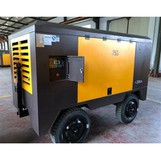
Hey there! As a supplier of piston air compressors, I've seen firsthand how important it is to keep these machines in tip - top shape. One crucial aspect of maintaining a piston air compressor is balancing the flywheel. In this blog, I'll share with you how to balance the flywheel on a piston air compressor.
Why is Flywheel Balancing Important?
Before we jump into the how - to, let's talk about why balancing the flywheel is such a big deal. The flywheel in a piston air compressor plays a vital role in stabilizing the engine's rotation. It stores energy during the power stroke and releases it during the other strokes, ensuring a smooth and consistent operation.
If the flywheel isn't balanced correctly, it can lead to a whole bunch of problems. You might notice excessive vibration, which not only makes the compressor noisy but can also cause premature wear and tear on the components. Over time, this can lead to costly repairs and even shorten the lifespan of your compressor.


Tools You'll Need
To balance the flywheel on a piston air compressor, you'll need a few basic tools:
- A dial indicator: This helps you measure the amount of imbalance.
- A set of weights: These are used to correct the imbalance.
- A drill and drill bits: You might need to drill holes in the flywheel to add or remove weight.
- A torque wrench: To ensure that any bolts or nuts are tightened to the correct specification.
Step - by - Step Guide to Balancing the Flywheel
Step 1: Preparation
First things first, make sure the compressor is turned off and unplugged (or the engine is shut down if it's a diesel - powered unit). Remove the flywheel cover to access the flywheel. This might involve removing a few bolts, so keep them in a safe place.
Step 2: Initial Inspection
Take a good look at the flywheel. Check for any obvious signs of damage, such as cracks or chips. A damaged flywheel can't be balanced properly and might need to be replaced.
Step 3: Mount the Dial Indicator
Mount the dial indicator in a way that it can measure the radial runout of the flywheel. The radial runout is the amount the flywheel deviates from a perfect circle as it rotates. Place the indicator tip against the outer edge of the flywheel.
Step 4: Measure the Runout
Slowly rotate the flywheel by hand, and watch the dial indicator. Take note of the maximum and minimum readings. The difference between these two readings is the radial runout. In most cases, the acceptable radial runout for a piston air compressor flywheel is around 0.002 to 0.005 inches. If the runout is outside this range, you'll need to balance the flywheel.
Step 5: Locate the Heavy Spot
Once you've measured the runout, you need to find the heavy spot on the flywheel. As you rotate the flywheel, the dial indicator will show the maximum reading at the heavy spot. Mark this spot clearly on the flywheel.
Step 6: Correct the Imbalance
There are two main ways to correct the imbalance: adding weight or removing weight.
Adding Weight: If the heavy spot is opposite the area where you need to add weight, you can use weights. These weights can be glued or bolted onto the flywheel. Make sure to follow the manufacturer's instructions when adding weights.
Removing Weight: If the heavy spot is where you need to reduce weight, you can use a drill to remove material from the flywheel. Start with small drill holes and gradually increase the size until the imbalance is corrected. Be very careful when drilling, as you don't want to damage the flywheel.
Step 7: Re - measure
After making adjustments, re - measure the radial runout using the dial indicator. Keep making small adjustments until the runout is within the acceptable range.
Step 8: Final Checks
Once you're satisfied with the balance, double - check all the bolts and nuts to make sure they're tightened properly using the torque wrench. Replace the flywheel cover and give the compressor a test run. Listen for any unusual noises or vibrations.
Our Piston Air Compressors
At our company, we offer a wide range of high - quality piston air compressors. For example, we have the W - 1.8/5 Diesel Motor 11kw Mini Air Compressor Piston Type Used with Rock Drill. This compact and powerful compressor is perfect for small - scale jobs and can be used with a rock drill.
Another great option is the 2V - 4/5 Mining Diesel Portable Belt Driven 4 Piston Air Compressor. It's designed for mining applications and offers reliable performance in tough environments.
And if you need a more heavy - duty compressor, check out the W - 2.8/5 Diesel 15kw Belt Driven Piston Air Compressor Pneumatic Jack Hammer. It has the power to run a pneumatic jack hammer and other heavy - duty tools.
Conclusion
Balancing the flywheel on a piston air compressor is a task that might seem a bit daunting at first, but with the right tools and a step - by - step approach, it's definitely doable. By keeping your flywheel balanced, you can ensure the smooth operation of your compressor, reduce maintenance costs, and extend its lifespan.
If you're in the market for a new piston air compressor or have any questions about flywheel balancing or our products, don't hesitate to contact us for procurement and further discussions.
References
- "Piston Air Compressor Maintenance Manuals"
- Industry - standard guides on air compressor balancing