Hey there! As a supplier of piston air compressors, I've heard all sorts of stories from customers about the noises their compressors make. It can be pretty annoying when your once - quiet compressor starts making a racket. So, I thought I'd share some of the common reasons why a piston air compressor might start making loud noises.
1. Loose Parts
One of the most common culprits behind a noisy piston air compressor is loose parts. Over time, the constant vibrations from the compressor's operation can cause bolts, nuts, and other fasteners to loosen up. When these parts aren't tightened properly, they can rattle around and create a lot of noise.
For example, the connecting rods that link the pistons to the crankshaft need to be firmly attached. If they're loose, you'll likely hear a knocking sound. This knocking can range from a light tap to a heavy thud, depending on how loose the part is. Another area to check is the compressor's motor mounts. If the motor isn't securely held in place, it can move around and cause a lot of unwanted noise.
To fix this issue, you'll need to do a thorough inspection of your compressor. Use a wrench to check and tighten all the visible bolts and nuts. Make sure to follow the manufacturer's torque specifications to avoid over - tightening, which can also cause problems.
2. Worn - Out Bearings
Bearings play a crucial role in the smooth operation of a piston air compressor. They reduce friction between moving parts, allowing the compressor to run efficiently. However, like all mechanical parts, bearings can wear out over time.
When bearings start to wear, they can make a grinding or growling noise. This is because the smooth surface of the bearing is no longer intact, and the metal parts are rubbing against each other. The main bearings that support the crankshaft and the bearings in the motor are particularly prone to wear.
Replacing worn - out bearings is a bit more involved than tightening loose parts. You'll usually need to disassemble parts of the compressor to access the bearings. It's a job that might be best left to a professional if you're not experienced with compressor repairs. But if you're up for the challenge, make sure to use high - quality replacement bearings to ensure long - term performance.
3. Air Leaks
Air leaks can also be a source of loud noises in a piston air compressor. When there's a leak in the air system, air rushes out at high speed, creating a hissing or whistling sound.
Leaks can occur in several places, such as the intake and discharge valves, the air hoses, and the gaskets. For instance, if the intake valve doesn't seal properly, air can leak back into the intake manifold, causing a hissing noise. Similarly, a damaged gasket between the compressor cylinders can lead to air leaks and a lot of noise.
To find air leaks, you can use a soapy water solution. Apply the solution to the suspected areas, and if there's a leak, you'll see bubbles forming as the air escapes. Once you've located the leak, you can repair or replace the damaged parts. For valves, you might need to clean or replace them, and for hoses and gaskets, simply swapping them out with new ones should do the trick.
4. Improper Lubrication
Proper lubrication is essential for the smooth and quiet operation of a piston air compressor. If the compressor isn't getting enough lubricant, the moving parts will experience more friction, which can lead to increased noise.
The pistons, cylinders, and crankshaft all need to be well - lubricated. Without enough oil, you might hear a screeching or scraping noise as these parts rub against each other. Additionally, insufficient lubrication can cause the compressor to overheat, which can lead to further damage.
Make sure to check the oil level regularly and use the type of oil recommended by the manufacturer. Over time, the oil can break down and lose its lubricating properties, so it's important to change the oil at the recommended intervals.
5. Excessive Vibration
Excessive vibration can make a piston air compressor extremely noisy. Vibration can be caused by several factors, including an unbalanced crankshaft or an unevenly installed compressor.
An unbalanced crankshaft can create a lot of shaking and noise. This can happen if the weights on the crankshaft are not properly distributed. To fix this, you'll need to have the crankshaft balanced by a professional.


If the compressor isn't installed on a level surface, it can also vibrate excessively. Make sure to place your compressor on a solid, flat surface. You can also use vibration - isolating pads to reduce the amount of vibration transferred to the floor and other surrounding objects.
Our Product Recommendations
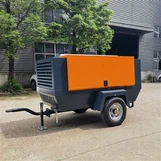
We offer a range of high - quality piston air compressors that are designed to operate quietly and efficiently. Check out our W - 3/5 3 Cylinder 5 Bar Small Diesel Piston Type Air Compressor, which is known for its reliable performance. Another great option is the W - 2.8/5 Diesel 15kw Belt Driven Piston Air Compressor Pneumatic Jack Hammer, perfect for heavy - duty applications. And if you need a mobile option, our 2V - 3.5/5 Mobile Diesel Motor Air Compressor with Piston Head is a great choice.
Conclusion
If your piston air compressor is making loud noises, don't panic. In most cases, the problem can be traced back to one of the issues I've discussed above. By doing a little troubleshooting and making some simple repairs, you can get your compressor running quietly again.
If you're in the market for a new piston air compressor or need help with repairs, feel free to reach out to us. We're here to assist you with all your compressor needs and help you find the best solution for your application. Let's talk about your requirements and see how we can work together to get you the right equipment.
References
- Compressor Manufacturer's Manuals
- Industry - Standard Compressor Repair Guides
- Online Forums and Communities for Compressor Owners