

As a solar light tower supplier, I've witnessed firsthand the growing demand for sustainable lighting solutions across various industries. Solar light towers offer a clean, efficient, and cost - effective alternative to traditional fuel - powered lighting systems. However, when it comes to using these innovative devices in high - altitude areas, a unique set of challenges emerges.
Harsh Climate Conditions
One of the most significant challenges in high - altitude areas is the harsh climate. The temperature can vary drastically between day and night. During the day, the sun shines brightly, and the temperature may rise, but at night, it can drop to extremely low levels. For solar light towers, this temperature fluctuation can have a severe impact on their performance.
The batteries used in solar light towers are particularly vulnerable. Most batteries have an optimal operating temperature range, and when the temperature drops below this range, the battery's capacity and performance decline. For instance, lithium - ion batteries, which are commonly used in modern solar light towers, experience a reduction in their charge and discharge efficiency at low temperatures. This means that the solar light tower may not be able to store as much energy during the day as it should, and it may not be able to provide sufficient lighting at night.
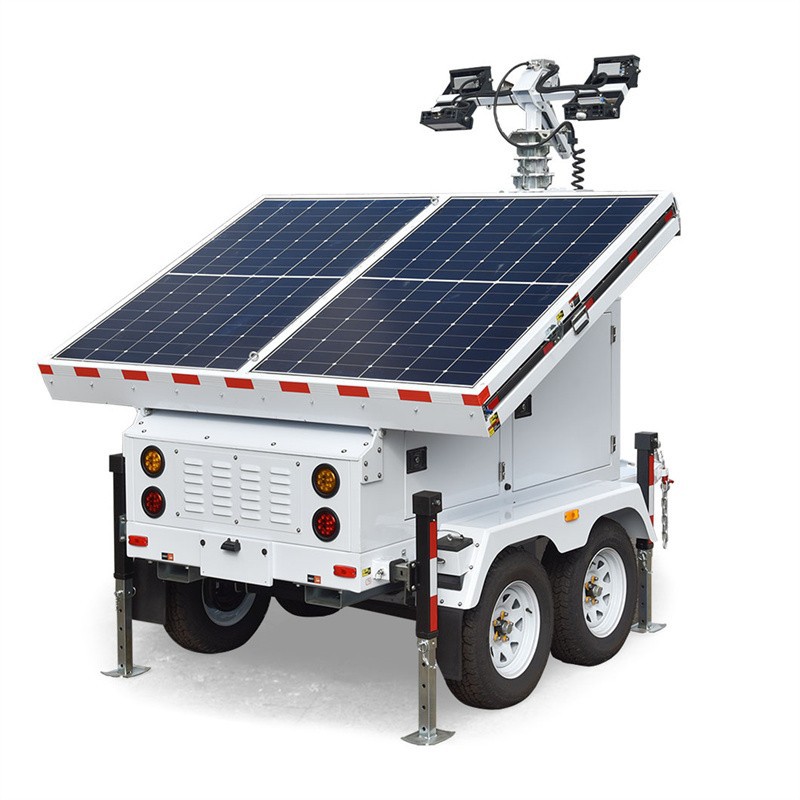
Moreover, high - altitude areas often experience strong winds. These winds can pose a physical threat to the solar light towers. The tower structure needs to be sturdy enough to withstand the force of the wind. If the tower is not properly designed or installed, it may be toppled over, causing damage to the equipment and potentially endangering nearby workers. The solar panels, which are usually mounted on the tower, are also at risk. High - speed winds can cause the panels to vibrate, leading to mechanical stress and potentially cracking the panels. This would reduce the solar light tower's ability to convert sunlight into electricity, further affecting its performance.
Reduced Solar Radiation Intensity
Although high - altitude areas are closer to the sun, the solar radiation intensity can be lower than expected. This is mainly due to the thinner atmosphere at high altitudes. The thinner atmosphere allows more ultraviolet (UV) radiation to reach the surface, but it also means that there is less air to scatter and absorb sunlight. As a result, the direct solar radiation may be concentrated in a smaller area, and the overall solar irradiance may be reduced in some cases.
Solar light towers rely on solar panels to convert sunlight into electricity. When the solar radiation intensity is low, the panels generate less power. This means that the charging process of the batteries is slower, and the solar light tower may not be able to accumulate enough energy to operate throughout the night. To compensate for this, larger solar panels or a greater number of panels may be required. However, this increases the cost and complexity of the solar light tower system.
Low Oxygen Levels
High - altitude areas typically have lower oxygen levels compared to sea - level areas. This can affect the performance of some components of the solar light tower. For example, if the solar light tower has a generator as a backup power source, the combustion process in the generator is less efficient due to the lack of oxygen. The engine may run poorly, produce less power, and emit more pollutants.
Even for solar - only light towers, the low oxygen levels can have an impact on the electronics. Some electronic components generate heat during operation, and proper ventilation is required to dissipate this heat. In an environment with low oxygen levels, the air density is also lower, which means that the natural convection cooling effect is reduced. This can cause the electronic components to overheat, leading to premature failure and reduced reliability of the solar light tower.
Maintenance and Accessibility
Maintenance of solar light towers in high - altitude areas is a challenging task. The remote location and difficult terrain of these areas make it hard to access the equipment. Transporting spare parts and maintenance tools to the site can be time - consuming and expensive. In addition, the harsh climate conditions make it difficult for maintenance workers to perform their tasks. Cold temperatures, strong winds, and low oxygen levels can all pose health risks to the workers, and they may need to take extra precautions and use specialized equipment to ensure their safety.

For example, if a solar panel needs to be replaced, it may be necessary to disassemble part of the tower structure. In high - altitude areas, this process becomes more complicated due to the challenging weather and terrain. Workers may need to use ropes and other climbing equipment to reach the panels, which increases the risk of accidents.
Our Solutions
Despite these challenges, our company offers a range of solar light towers that are designed to overcome these difficulties. Our UST2400 Energy Saving Mobile Solar Energy Lighting Towers for Mining are equipped with high - performance batteries that are designed to operate in a wide temperature range. These batteries can maintain a relatively high charge and discharge efficiency even in cold conditions, ensuring that the light tower can provide reliable lighting at night.
The ULT - 900 Mining Portable Emergency Solar Powered Lighting Tower 3 Panels features a robust and wind - resistant design. The tower structure is made of high - strength materials that can withstand strong winds, and the solar panels are securely mounted to prevent damage from vibrations.
Our ULT - 1200 Portable Battery Powered Led Lighting Tower for Construction Site is designed with efficient cooling systems to handle the low - oxygen environment in high - altitude areas. The electronic components are carefully selected and configured to ensure reliable operation even under challenging conditions.
Conclusion
Using solar light towers in high - altitude areas presents a series of challenges related to climate, solar radiation, oxygen levels, and maintenance. However, with the right design and technology, these challenges can be overcome. Our company is committed to providing high - quality solar light tower solutions that can operate effectively in these demanding environments.
If you are in need of solar light towers for high - altitude projects, we invite you to contact us for procurement and negotiation. We can provide you with detailed product information and customized solutions to meet your specific requirements.
References
- "Solar Energy Engineering: Processes and Systems" by Soteris A. Kalogirou
- "Handbook of Batteries" by David Linden and Thomas B. Reddy
- "High - Altitude Physiology and Medicine" by Peter Hackett and Robert Roach


