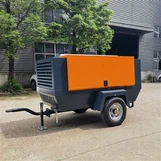
As a seasoned supplier of rock drill air compressors, I've witnessed firsthand the critical role that various components play in the efficient and safe operation of these powerful machines. Among these components, the pressure relief valve stands out as a silent guardian, ensuring that the air compressor operates within safe pressure limits. In this blog post, I'll delve into the function of a pressure relief valve in a rock drill air compressor, exploring its importance, working principle, and the impact it has on the overall performance of the equipment.
Understanding the Basics of a Rock Drill Air Compressor
Before we dive into the specifics of the pressure relief valve, let's take a moment to understand the basic operation of a rock drill air compressor. These compressors are designed to convert power into potential energy stored in pressurized air. This compressed air is then used to power rock drills, which are essential tools in mining, construction, and other industries where hard materials need to be drilled or broken.
The process of air compression involves taking in ambient air, compressing it to a higher pressure, and then storing it in a tank or delivering it directly to the rock drill. During this process, the pressure inside the compressor can increase significantly, and if not properly controlled, it can lead to dangerous situations.
The Function of a Pressure Relief Valve
The primary function of a pressure relief valve in a rock drill air compressor is to protect the equipment and the operators from overpressure situations. When the pressure inside the compressor exceeds a pre-set limit, the pressure relief valve opens automatically, allowing excess air to escape. This action reduces the pressure inside the compressor to a safe level, preventing damage to the compressor, the rock drill, and other connected components.
Safety First
Safety is the most important aspect of the pressure relief valve's function. Overpressure in an air compressor can cause a variety of problems, including leaks, ruptures, and even explosions. These incidents can not only damage the equipment but also pose a serious threat to the safety of the operators. By opening at the right time, the pressure relief valve ensures that the pressure inside the compressor never reaches a dangerous level, providing a crucial layer of protection.
Equipment Protection
In addition to safety, the pressure relief valve also helps to protect the equipment from damage. High pressure can cause excessive wear and tear on the compressor's components, such as the pistons, valves, and seals. Over time, this can lead to premature failure of these components, resulting in costly repairs and downtime. By maintaining the pressure within a safe range, the pressure relief valve helps to extend the lifespan of the compressor and reduce maintenance costs.
Maintaining Performance
The pressure relief valve also plays a role in maintaining the performance of the rock drill air compressor. When the pressure is too high, the compressor may not be able to operate efficiently, leading to reduced output and increased energy consumption. By regulating the pressure, the pressure relief valve ensures that the compressor operates at its optimal level, providing a consistent supply of compressed air to the rock drill.
How a Pressure Relief Valve Works
The operation of a pressure relief valve is relatively simple. It consists of a valve body, a spring, and a disc or poppet. The spring is pre-tensioned to a specific pressure, which is known as the set pressure. When the pressure inside the compressor reaches the set pressure, the force exerted by the compressed air overcomes the force of the spring, causing the disc or poppet to lift off its seat. This allows excess air to escape through the valve, reducing the pressure inside the compressor.
Once the pressure drops below the set pressure, the spring force closes the valve, preventing further air from escaping. The set pressure of the valve can be adjusted to suit the specific requirements of the compressor and the application.
Types of Pressure Relief Valves
There are several types of pressure relief valves available for rock drill air compressors, each with its own advantages and disadvantages. The most common types include:
Direct Acting Relief Valves
Direct acting relief valves are the simplest and most commonly used type of pressure relief valve. They consist of a spring-loaded disc or poppet that opens directly in response to the pressure inside the compressor. These valves are relatively inexpensive and easy to maintain, but they may not be suitable for applications where high flow rates or precise pressure control are required.
Pilot-Operated Relief Valves
Pilot-operated relief valves are more complex than direct acting relief valves, but they offer several advantages. They use a pilot valve to control the opening and closing of the main valve. This design allows for more precise pressure control and higher flow rates. Pilot-operated relief valves are often used in larger compressors or applications where safety and performance are critical.
The Importance of Regular Maintenance
Like any other component in a rock drill air compressor, the pressure relief valve requires regular maintenance to ensure its proper functioning. Over time, the valve may become clogged with dirt, debris, or oil, which can prevent it from opening or closing properly. In addition, the spring may lose its tension, causing the valve to open at the wrong pressure.
Regular maintenance of the pressure relief valve includes cleaning, inspection, and testing. The valve should be cleaned periodically to remove any dirt or debris that may have accumulated. It should also be inspected for signs of wear or damage, such as cracks or leaks. Finally, the valve should be tested to ensure that it opens and closes at the correct pressure.
Our Product Range
At our company, we offer a wide range of rock drill air compressors, including the 2V-3.5/5 Mobile Diesel Motor Air Compressor with Piston Head, the W-3/5 3 Cylinder 5 Bar Small Diesel Piston Type Air Compressor, and the W-3.5/5 Mining Piston Type Air Compressor Head 3 Pistons for Rock Drilling. All of our compressors are equipped with high-quality pressure relief valves to ensure the safety and performance of the equipment.
Conclusion
In conclusion, the pressure relief valve is a critical component in a rock drill air compressor. It plays a vital role in protecting the equipment and the operators from overpressure situations, ensuring safety, and maintaining the performance of the compressor. By understanding the function and importance of the pressure relief valve, you can make informed decisions when choosing and maintaining your rock drill air compressor.
If you're in the market for a reliable rock drill air compressor or have any questions about pressure relief valves, please don't hesitate to contact us. Our team of experts is ready to assist you with your procurement needs and provide you with the best solutions for your application.


References
- ASME Boiler and Pressure Vessel Code, Section VIII, Division 1
- Compressed Air and Gas Institute (CAGI) Standards
- OSHA Regulations for Compressed Air Systems