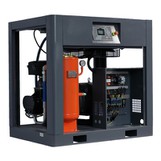
Hey there! As a supplier of electric screw compressors, I've been getting a lot of questions lately about how rotational speed affects the performance of these machines. So, I thought I'd take a deep dive into this topic and share some insights with you all.
First off, let's talk about what an electric screw compressor is. It's a type of compressor that uses two rotors (screws) to compress air. These compressors are widely used in various industries because they're reliable, efficient, and can deliver a continuous supply of compressed air.
Now, the rotational speed of an electric screw compressor refers to how fast the rotors spin. This speed is usually measured in revolutions per minute (RPM). And trust me, it plays a huge role in how well the compressor performs.
1. Impact on Air Delivery
One of the most obvious effects of rotational speed is on the air delivery capacity of the compressor. Simply put, the faster the rotors spin, the more air the compressor can deliver. This is because at higher RPMs, the screws can trap and compress more air in a given amount of time.
For example, if you have a job that requires a large volume of compressed air, like in a big manufacturing plant or a mining operation, you'd want a compressor with a higher rotational speed. Our 75kw Mobile Electric Rotary Screw Air Compressor for Mining is a great option for such scenarios. It can spin at a relatively high speed, allowing it to provide the large amount of air needed for mining operations.
However, it's important to note that there's a limit to how much the air delivery can increase with speed. At extremely high RPMs, the compressor may start to experience issues like increased leakage between the rotors and the housing, which can actually reduce the overall air delivery efficiency.
2. Effect on Compression Efficiency
Compression efficiency is another crucial aspect affected by rotational speed. Efficiency here refers to how well the compressor can convert electrical energy into compressed air energy.
When the rotational speed is too low, the compressor may not be able to compress the air effectively. The air may not reach the desired pressure, and more energy will be wasted in the process. On the other hand, if the speed is too high, the compressor will have to work harder, which can also lead to a decrease in efficiency.
There's an optimal rotational speed range for each compressor model where it operates at peak efficiency. As a supplier, we've done a lot of testing to determine these optimal ranges for our products. For instance, our 90kw Small Electric Single Stage Portable Screw Compressor Machine is designed to operate at a specific speed range that maximizes its compression efficiency. This means you'll get the most compressed air for the least amount of electricity, saving you money in the long run.
3. Impact on Wear and Tear
Rotational speed also has a significant impact on the wear and tear of the compressor components. Higher RPMs mean more friction and stress on the rotors, bearings, and other moving parts. Over time, this can lead to increased wear and a shorter lifespan for the compressor.
If the compressor is running at a very high speed constantly, the parts will need to be replaced more frequently, which can be costly. That's why it's important to choose the right rotational speed based on your actual needs. Our 132kw Electric Trailer Type Screw Air Compressor Machinery 18 Bar is built to handle high - pressure applications, but we still recommend operating it within a reasonable speed range to ensure its long - term reliability.
4. Noise and Vibration
Another factor affected by rotational speed is the noise and vibration levels of the compressor. Generally, the faster the compressor spins, the louder and more vibratory it will be. This can be a problem in environments where noise is a concern, like in an office building or a residential area.
We've invested a lot of time and resources in developing technologies to reduce the noise and vibration of our compressors, even at higher speeds. But it's still something to keep in mind when choosing the rotational speed. If noise is a major issue for you, you might want to opt for a compressor that can operate at a lower speed while still meeting your air delivery requirements.
5. Power Consumption
Power consumption is directly related to the rotational speed of the compressor. As the speed increases, the power required to drive the compressor also goes up. This means higher electricity bills for you.
However, as I mentioned earlier, there's an optimal speed range where the compressor can operate most efficiently. By choosing the right speed, you can strike a balance between getting enough air delivery and keeping the power consumption in check. This will help you save money on your energy costs over the life of the compressor.
Choosing the Right Rotational Speed
So, how do you choose the right rotational speed for your electric screw compressor? Well, it depends on several factors.
First, consider your air demand. If you need a large volume of air quickly, you'll likely need a higher rotational speed. But if your air demand is relatively low, a lower speed may be sufficient.
Second, think about the operating environment. If noise and vibration are a concern, or if you want to minimize wear and tear on the compressor, you might want to choose a lower speed.
Finally, take into account your budget. Higher - speed compressors may cost more upfront, and they also tend to consume more power. So, you need to find a balance that works for your financial situation.


As a supplier, we're here to help you make the right decision. Our team of experts can analyze your specific needs and recommend the best compressor and rotational speed for you.
Conclusion
In conclusion, the rotational speed of an electric screw compressor has a profound impact on its performance. It affects air delivery, compression efficiency, wear and tear, noise and vibration, and power consumption. By understanding these impacts and choosing the right rotational speed, you can ensure that your compressor operates at its best, saving you money and providing reliable compressed air for your applications.
If you're interested in purchasing an electric screw compressor or have any questions about rotational speed and performance, don't hesitate to reach out. We're always happy to have a chat and help you find the perfect compressor for your needs.
References
- Compressor Handbook: A Guide to Selection, Application, and Maintenance
- Industry research reports on electric screw compressors