

As a dedicated supplier of compressor air screw VSD (Variable Speed Drive) systems, I've encountered numerous inquiries regarding the maximum air temperature these compressors can handle. Understanding this critical parameter is essential for ensuring the efficient and reliable operation of these machines, as well as for making informed decisions when selecting the right compressor for specific applications.
The Basics of Compressor Air Screw VSD
Before delving into the maximum air temperature, let's briefly review the fundamental principles of compressor air screw VSD. These compressors utilize a pair of helical rotors to compress air. The VSD technology allows the compressor to adjust its speed according to the actual air demand, resulting in significant energy savings and improved system efficiency.
Factors Affecting the Maximum Air Temperature
Several factors influence the maximum air temperature that a compressor air screw VSD can handle. These include the design of the compressor, the quality of the lubricant, and the operating environment.
- Compressor Design: The design of the compressor plays a crucial role in determining its temperature tolerance. High - quality compressors are typically designed with efficient cooling systems, such as oil coolers and air coolers, to dissipate heat effectively. The internal components, such as the rotors and bearings, are also engineered to withstand high temperatures without significant wear or damage.
- Lubricant Quality: The lubricant used in the compressor is another important factor. A high - quality lubricant can provide better heat transfer and protection against wear. It also has a higher flash point, which means it can withstand higher temperatures without breaking down. Over time, if the lubricant is exposed to temperatures beyond its limit, it can degrade, leading to reduced performance and potential damage to the compressor.
- Operating Environment: The ambient temperature and humidity of the operating environment can have a significant impact on the compressor's temperature. In hot and humid conditions, the compressor has to work harder to cool itself, which can increase the internal temperature. Additionally, dust and debris in the air can clog the cooling systems, further reducing the compressor's ability to dissipate heat.
Typical Maximum Air Temperature Ranges
In general, most compressor air screw VSD systems can handle air temperatures in the range of 60 - 80 degrees Celsius (140 - 176 degrees Fahrenheit). However, this can vary depending on the specific model and manufacturer. Some high - performance compressors are designed to operate at even higher temperatures, up to 90 degrees Celsius (194 degrees Fahrenheit).
It's important to note that operating the compressor at or near its maximum temperature limit for extended periods can have several negative consequences. It can lead to increased wear on the components, reduced lubricant life, and potentially cause the compressor to overheat and shut down. Therefore, it's recommended to keep the operating temperature well below the maximum limit to ensure long - term reliability and performance.
Impact of High Temperatures on Compressor Performance
When the air temperature exceeds the recommended limit, several issues can arise.
- Reduced Efficiency: As the temperature rises, the compressor has to work harder to maintain the desired pressure. This results in increased energy consumption and reduced overall efficiency. The compressor may also experience a decrease in its volumetric efficiency, meaning it delivers less air per unit of energy input.
- Component Wear: High temperatures can cause the components of the compressor to expand, leading to increased friction and wear. This can shorten the lifespan of the rotors, bearings, and other critical parts. In extreme cases, it can even cause permanent damage to the compressor, requiring costly repairs or replacement.
- Lubricant Degradation: As mentioned earlier, high temperatures can cause the lubricant to break down. This can lead to a loss of lubrication, increased friction, and the formation of sludge and deposits. These issues can further exacerbate the wear on the components and reduce the compressor's performance.
Our Product Offerings
At our company, we offer a wide range of compressor air screw VSD systems that are designed to handle various operating conditions. For example, our 7.5kw 10hp Small Rotary Screw Air Compressor Machines are suitable for small - scale applications where space and energy efficiency are important. These compressors are equipped with advanced cooling systems and high - quality lubricants to ensure reliable operation even in moderately high - temperature environments.
Our LB20 Energy - saving Mini Rotary Screw Air Compressor 20 Hp 10 Bar is another excellent option for applications that require a higher air output. It features a compact design and energy - saving technology, making it an ideal choice for industrial settings.

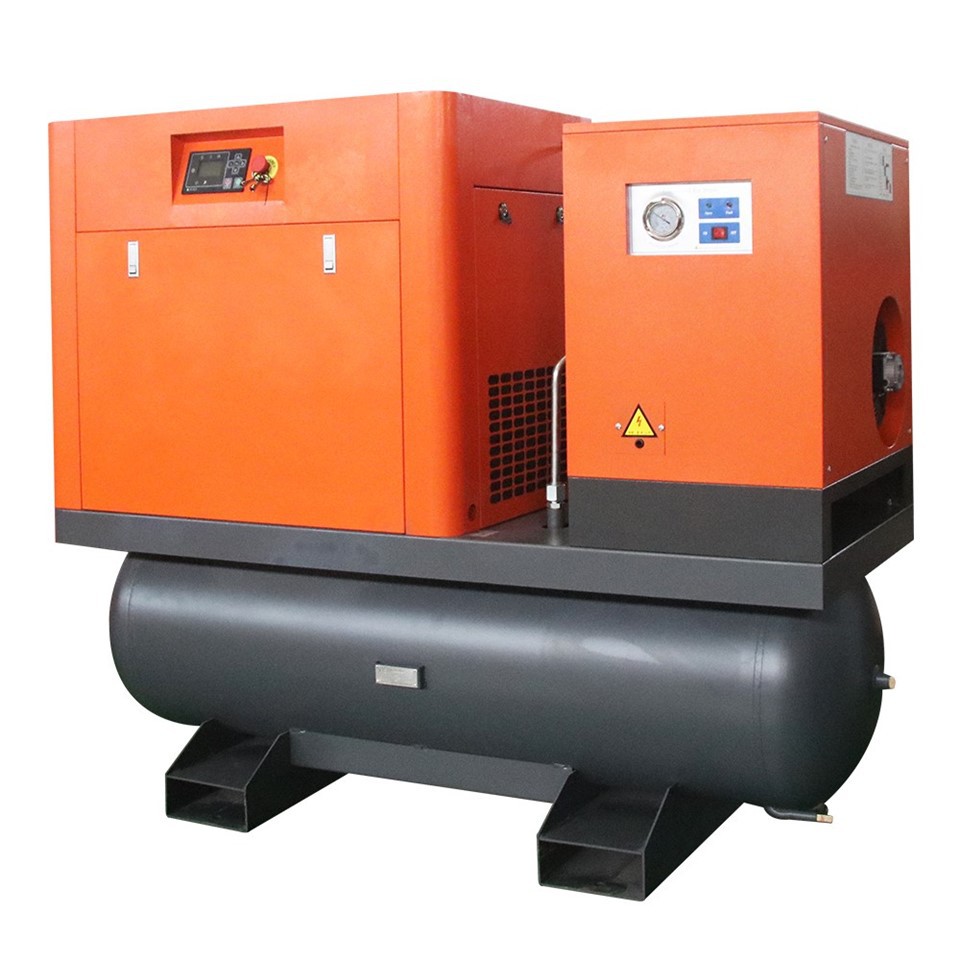
For more comprehensive solutions, we also offer the ZD10 Integrated Rotary Screw Compressor With Air Dryer Air Tank. This integrated system combines a compressor, air dryer, and air tank, providing a complete air supply solution. It is designed to handle a wide range of air temperatures and operating conditions, ensuring consistent performance.
Tips for Operating Compressors in High - Temperature Environments
If you need to operate your compressor in a high - temperature environment, here are some tips to ensure its optimal performance:
- Proper Ventilation: Ensure that the compressor is installed in a well - ventilated area. This will help to dissipate heat more effectively and prevent the build - up of hot air around the compressor.
- Regular Maintenance: Perform regular maintenance on the compressor, including checking the lubricant level, cleaning the cooling systems, and inspecting the components for wear. This will help to identify and address any potential issues before they become major problems.
- Monitor the Temperature: Use temperature sensors to monitor the air temperature and the temperature of the compressor components. This will allow you to detect any abnormal temperature increases and take appropriate action.
Conclusion
Understanding the maximum air temperature that a compressor air screw VSD can handle is crucial for ensuring its reliable and efficient operation. By considering factors such as compressor design, lubricant quality, and operating environment, you can make informed decisions when selecting a compressor and operating it in various conditions.
If you are interested in learning more about our compressor air screw VSD systems or have any questions regarding their temperature tolerance and performance, we encourage you to contact us for a detailed discussion. Our team of experts is ready to assist you in finding the right compressor solution for your specific needs.
References
- Compressor Handbook: A Comprehensive Guide to Compressor Technology.
- Technical specifications provided by compressor manufacturers.


