

Hey there! As a supplier of screw AC compressors, I often get asked about the suction pressure of these nifty machines. So, I thought I'd take a moment to break it down for you in a way that's easy to understand.
First off, let's talk about what suction pressure actually is. In simple terms, the suction pressure of a screw AC compressor is the pressure at which the compressor draws in refrigerant gas from the evaporator. This is a crucial part of the refrigeration cycle because it sets the stage for the rest of the process.
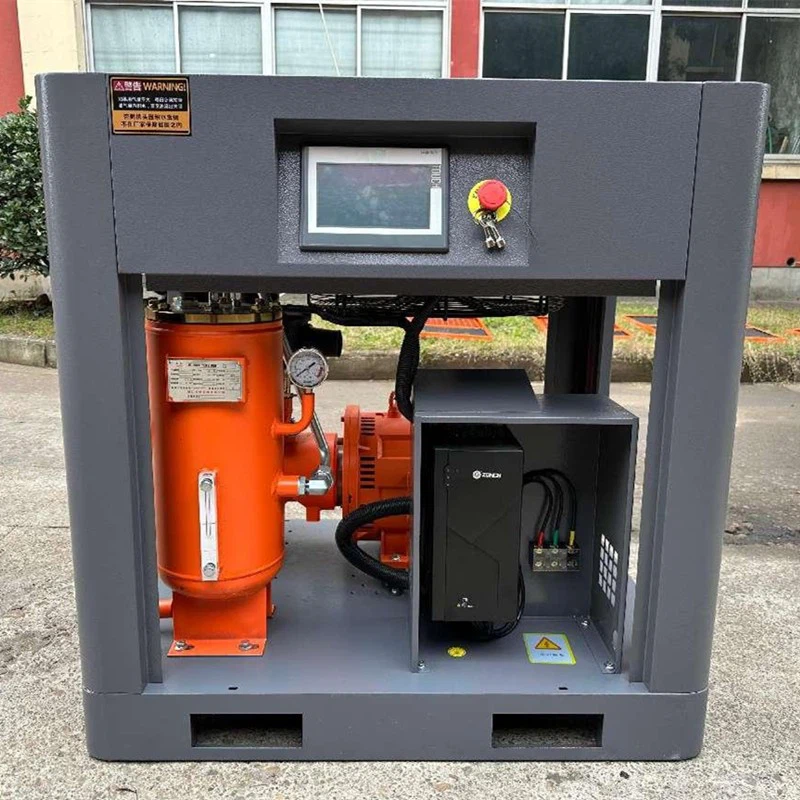

The suction pressure plays a big role in how well the compressor works. If the suction pressure is too low, it can mean that the compressor isn't getting enough refrigerant. This can lead to all sorts of problems, like the compressor overheating or not cooling effectively. On the other hand, if the suction pressure is too high, it can put extra strain on the compressor, which can shorten its lifespan and increase the risk of breakdowns.
So, what affects the suction pressure of a screw AC compressor? Well, there are a few factors. One of the main ones is the temperature of the refrigerant in the evaporator. When the temperature is low, the pressure will also be low. That's because cold gas is denser and takes up less space, so there's less pressure pushing against the compressor.
Another factor is the load on the compressor. If the compressor is working hard to cool a large space or a lot of equipment, it will need to draw in more refrigerant. This can cause the suction pressure to drop as the compressor tries to keep up with the demand.
The condition of the evaporator and the refrigerant lines can also have an impact on the suction pressure. If the evaporator is dirty or clogged, it can restrict the flow of refrigerant, which can lead to lower suction pressure. Similarly, if there are leaks in the refrigerant lines, the pressure can drop as the refrigerant escapes.
Now, let's talk about some typical suction pressure ranges for screw AC compressors. These can vary depending on the specific model and application, but generally, you can expect the suction pressure to be between 30 and 100 psi (pounds per square inch). Of course, this is just a rough estimate, and it's important to refer to the manufacturer's specifications for your particular compressor.
At our company, we offer a wide range of screw AC compressors to suit different needs and budgets. For example, we have the ZD15 15hp 11kw Electric Permanent Magnet Variable Frequency Screw Type Air Compressor. This compressor is great for small to medium-sized applications and offers excellent energy efficiency thanks to its variable frequency drive.
If you need something more powerful, we also have the ZD50 Industrial 37kw 50hp Stationary Variable Speed Rotary Screw Air Compressor. This industrial-grade compressor is designed to handle heavy loads and is perfect for large commercial or industrial settings.
And for those who need a portable option, we have the 4 in 1 Best Compact Portable Electric 11kw Screw Air Compressor. This compressor is lightweight and easy to move around, making it ideal for on-site work or small workshops.
When it comes to maintaining the suction pressure of your screw AC compressor, regular maintenance is key. This includes cleaning the evaporator, checking the refrigerant levels, and inspecting the refrigerant lines for leaks. It's also a good idea to have your compressor serviced by a professional at least once a year to ensure that it's running at its best.
In addition to regular maintenance, it's important to choose the right compressor for your needs. Make sure to consider factors like the size of the space you need to cool, the load requirements, and the energy efficiency of the compressor. Our team of experts can help you choose the right compressor and provide you with all the information you need to keep it running smoothly.
If you're in the market for a screw AC compressor, or if you have any questions about suction pressure or any other aspect of compressor operation, don't hesitate to get in touch. We're here to help you find the right solution for your needs and ensure that you get the most out of your investment.
So, there you have it – a brief overview of the suction pressure of a screw AC compressor. I hope this has been helpful, and if you have any more questions, feel free to leave a comment below or contact us directly.
References:
- HVAC textbooks and industry standards for general knowledge on screw AC compressor operation and suction pressure.
- Manufacturer's documentation for specific information on our screw AC compressor models.


