If you're sourcing tapered rock drill bits for clients in mining, quarrying, or tunnel construction, you've likely run into the same question from buyers: "Should I order chisel bits or button bits?"
The instinctive answer is button bit - longer service life, faster penetration, and better performance data on paper. But that answer is wrong for a significant portion of small-hole drilling applications. Recommending the "better" product to a buyer who doesn't need it doesn't build trust. It builds returns, complaints, and lost accounts.
Here's how to think through the decision correctly.
What the Two Bit Types Actually Do Differently
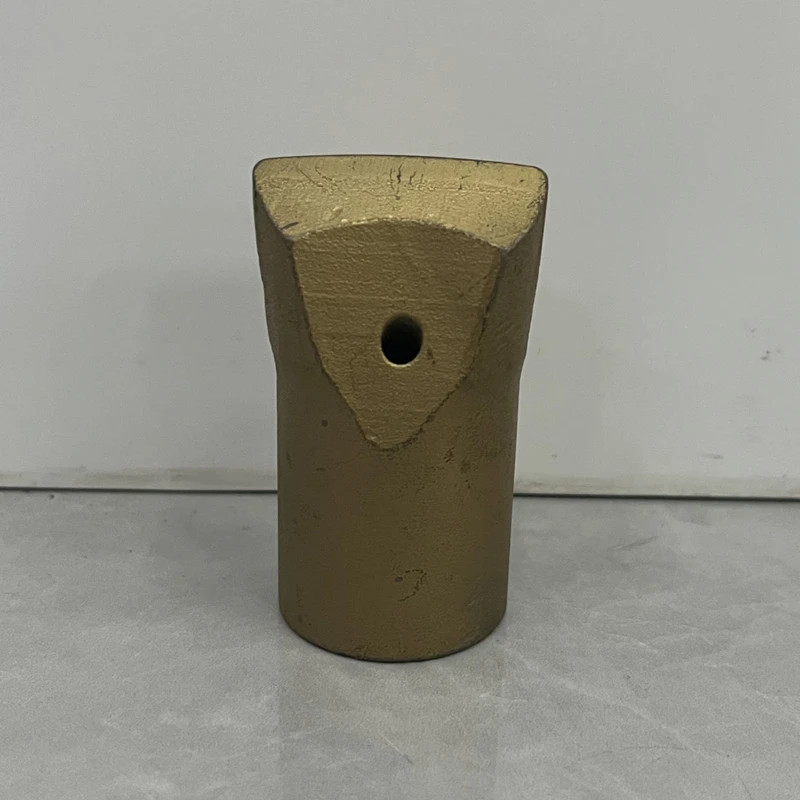
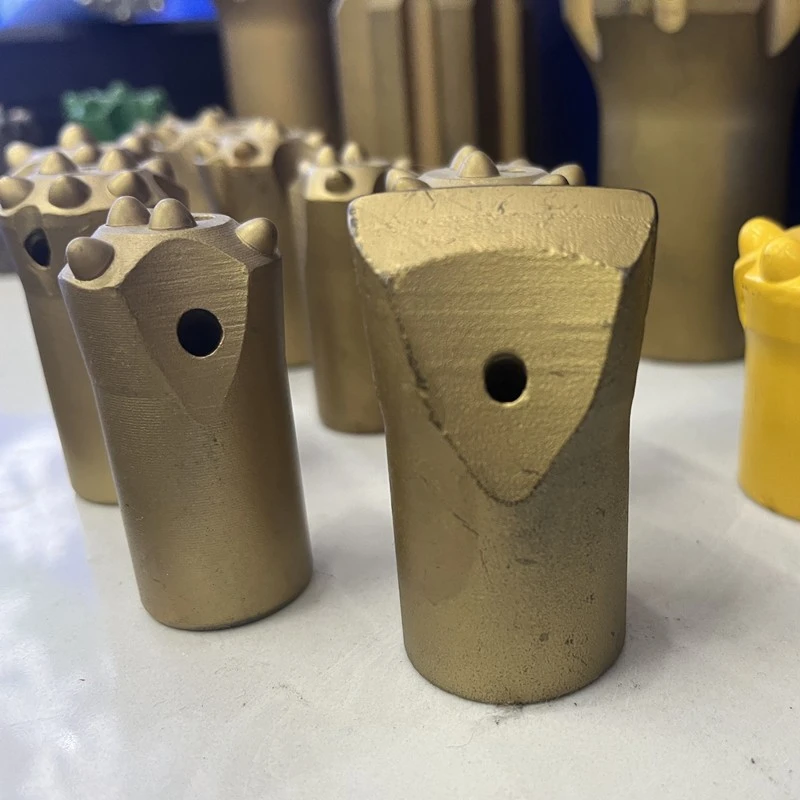
A tapered chisel drill bit has a single flat tungsten carbide blade brazed across the bit face. When the rock drill delivers an impact, that blade strikes the rock in one linear motion, shearing and chipping material along a straight path. The design is mechanically simple, which is precisely its strength.
A tapered button bit replaces that single blade with multiple tungsten carbide inserts - hemispherical or parabolic buttons - distributed across the bit face. Each button concentrates impact energy onto a small contact point, crushing rock rather than shearing it. More contact points, more aggressive fragmentation, more consistent performance in harder material.
Both types use a tapered connection (7°, 11°, or 12° taper) to mate with a tapered drill rod, and both are driven by lightweight pneumatic rock drills such as the YT28 or Y24 - the standard equipment for small-diameter hole drilling in underground mining and quarry applications.
The difference is not which one performs better in isolation. The difference is which one matches the actual conditions your buyers are drilling in.
The Decision Really Comes Down to Rock Hardness
This is where most sourcing decisions go wrong. Buyers - and sometimes suppliers - treat "button bit is more advanced" as a universal truth, when in practice it's a context-dependent statement.
- Chisel bits are the correct choice when:
Rock hardness is low to medium (roughly Mohs 3–5), such as limestone, coal seam walls, clay rock, or soft sandstone
Hole diameter is under 50mm - the range where chisel geometry delivers efficient penetration without excessive blade wear
The drilling rig is a hand-held or air-leg pneumatic drill with limited impact energy output
The site has access to a grinding machine, allowing worn blades to be resharpened and the bit returned to service
- Button bits become the better choice when:
Rock hardness moves into medium-hard to hard territory (Mohs 5–7+), such as granite, basalt, or abrasive quartzite
Consistent penetration rate matters more than unit cost per bit
The operation runs long shifts without easy access to maintenance facilities
The critical point: in soft to medium rock with a light-duty drill, a chisel bit often outperforms a button bit on a cost-per-meter basis, because it costs less, drills adequately fast, and can be resharpened multiple times before replacement. A button bit in the same conditions is simply overpaying for durability that the formation doesn't demand.
The Resharpening Factor Most Buyers Overlook
Chisel bits can be resharpened on-site using a standard bit grinder. When the blade wears down or develops a flat, a trained operator restores the cutting edge in minutes. One chisel bit may go through three to five resharpening cycles before the carbide is too depleted to continue.
Button bits cannot be resharpened in any practical field sense. Once the carbide inserts wear flat or fracture, the bit is replaced. For remote mining operations or smaller quarry sites in developing markets - a significant share of the end-user base for imported tapered drill bits - this distinction carries real economic weight.
When you're advising a trading company or distributor who supplies remote mines in Southeast Asia, Sub-Saharan Africa, or inland South America, the question isn't just "which bit drills faster." It's "which bit keeps drilling when the supply chain is slow."
A Practical Selection Framework
| Condition | Chisel Bit | Button Bit |
|---|---|---|
| Rock hardness | Mohs 3–5 (soft to medium) | Mohs 5–7+ (medium-hard to hard) |
| Hole diameter | ≤50mm | ≤50mm (both apply) |
| Drill type | Light pneumatic (YT28, Y24) | Light to medium pneumatic |
| Field resharpening | Yes - multiple cycles | No |
| Unit cost | Lower | Higher |
| Best for | High-volume, cost-sensitive, soft rock | Hard rock, long shifts, fewer stops |
| Typical application | Coal mines, limestone quarries, anchor holes in soft formation | Granite quarries, basalt, hard-rock tunneling |
What This Means for Your Sourcing Decisions
If your buyers are supplying small-scale mines or quarries working in soft to medium rock with hand-held pneumatic drills, a 36mm tapered chisel drill bit is not a budget compromise - it is the technically correct specification. Stocking it alongside button bits gives your customers a complete offer and positions you as a supplier who understands drilling conditions, not just catalog numbers.
The buyers who receive the right guidance at the sourcing stage don't switch suppliers. The ones who receive a button bit recommendation for a soft-rock chisel job eventually figure out what happened.
Moderate Machine supplies 36mm tapered chisel drill bits matched to standard light-duty pneumatic rock drills, with 7°, 11°, and 12° taper options available.