If you search "how to choose a drill pipe," you'll find plenty of guides comparing carbon steel to alloy steel, listing API thread standards, and running through outer diameters from 60mm to 200mm. That information isn't wrong. But it answers the wrong question for a lot of buyers.
If you're running a small gold mine in the Andes, or drilling community water wells in West Africa, your real question isn't "which material has the highest tensile strength." It's this: when this pipe wears out, cracks a thread, or needs a replacement part - can I actually get one, and can my crew actually fit it?
That question rarely shows up in drill pipe buying guides. It's the one we get asked constantly. And it's the one this article is built around.

The Hidden Cost Nobody Puts in the Spec Sheet
A drill pipe's real cost isn't the invoice price. It's the sum of:
- How often it fails
- How long the site sits idle waiting for a replacement
- Whether local technicians can actually service it
- Whether the connection threads match the hammer, rig, or compressor already on site
In mature markets with dense supplier networks and trained service techs, these costs are almost invisible - a replacement part is a phone call away. In remote mining regions or off-grid drilling sites, they're the entire ballgame. A pipe with slightly lower fatigue resistance but universal, easy-to-source fittings will often outperform a "superior" spec pipe that nobody nearby knows how to maintain.
This is the logic we design around, and it's worth walking through two real jobs where it played out.

YT27 Pneumatic Rock Drilling Machines Air Pusher Leg Rock Drill
Case One: Small-Scale Gold Mining in Peru
A small gold mining operation in Peru was working scattered, hard-to-access tunnel faces - the kind of site where a bulky, complex rig simply isn't practical. Their drilling needs came with three specific constraints:
- Scattered, hard-to-reach mine faces meant the drilling tool had to be light and portable - no room for oversized equipment.
- Unreliable local parts supply meant the pipe and its fittings had to use widely interchangeable components, not proprietary connections.
- Mixed skill levels among operators meant the equipment needed to tolerate less-than-perfect handling without breaking down.
We supplied a YT27 pneumatic leg rock drill setup running φ34–42mm drill pipe, sized for holes 2.5–3m deep - a footprint proven and simple enough that most parts on the market are cross-compatible. Alongside the equipment, we shipped a Spanish-language quick reference card and basic disassembly tools, and recommended the crew stock two extra sets of wear parts (water needles, shank sleeves, leg seals) as a first-round spare kit.
Results after deployment:
- Drilling speed of roughly 0.25–0.35 m/min in rock with an f-value of 8–10
- Zero major component failures across the first 300 operating hours
- The customer placed a follow-up order for 100 additional units six months later
None of that came from choosing the highest-spec pipe available. It came from matching the pipe and drill string to what the site - and the people running it - could actually sustain.
Case Two: Community Water Wells in Sierra Leone
A drilling contractor in Sierra Leone needed to sink water wells for rural communities with no municipal power grid nearby. Their operating conditions ruled out several "standard" solutions outright:
- No grid power - the rig had to be diesel-driven and fully towable between sites.
- Fuel cost mattered as much as speed - drilling efficiency and fuel economy had to be balanced, not traded off.
- Weak local repair infrastructure meant the equipment needed a low failure rate and straightforward maintenance.
We provided an FYL200 mobile water well rig fitted with a low-speed, high-torque rotary motor suited to loose and weathered rock formations, paired with drill pipe sized for boreholes of φ150–200mm to a depth of 40–60m. We added fuel metering and a drilling-rate limiter to help operators avoid over-driving the string, simplified the piping layout, and applied bilingual maintenance stickers with diagrams so the crew could self-service without a manual in hand.
Results after deployment:
- Average well completion time of about 2.5 hours per well (50m depth, loose layer plus weathered rock)
- Fuel consumption of roughly 8–10 liters per hour
- Seven community drinking-water wells completed to date
Here, the deciding factor wasn't drill pipe metallurgy - it was matching pipe torque capacity and drive system to a diesel-only, low-maintenance-capacity environment.

FYL200 Portable Water Well Drill Rig Deep Rock Drilling Machine
What These Two Cases Actually Teach About Drill Pipe Selection
Strip away the site-specific details, and both jobs point to the same three questions - ask these before you compare a single spec sheet:
- What can actually be replaced on site? A pipe with a common thread standard and widely available diameter (like the φ34–42mm and φ150–200mm ranges used above) will keep you drilling longer than a marginally stronger pipe with a proprietary or rare connection.
- What's the operator's actual skill ceiling? Equipment that tolerates rough handling - simpler joints, forgiving tolerances, clear bilingual documentation - reduces downtime more reliably than raw material upgrades. The Peru case leaned on this directly.
- What's the power and logistics reality of the site? Grid access (or lack of it), fuel cost, and portability requirements should shape drill pipe and rig selection just as much as rock hardness does. The Sierra Leone case was won on this axis, not on pipe strength alone.
This is also the thinking behind how we name our own equipment line. "Moderate" isn't a claim about being average - it's a deliberate choice not to over-engineer for a spec sheet at the expense of what a site can realistically sustain. A drill pipe that's slightly less impressive on paper but matched to your rock, your rig, and your crew will outperform one that isn't, every time it actually matters: in the field, six months in, when something needs fixing.
Matching Drill Pipe to Your Own Project
If your operation shares any of the constraints above - remote sites, mixed crew experience, thin local parts supply, or off-grid power - the starting point isn't a materials chart. It's an honest look at what your site and team can support day to day.
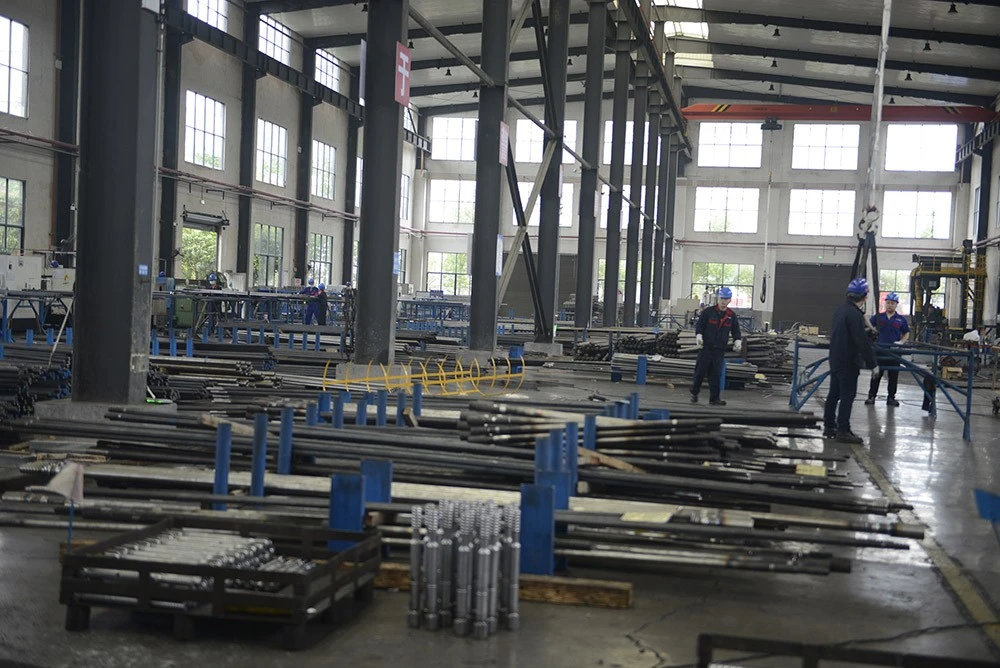
Our drill pipe range covers standard, heavy-weight, and tapered configurations for DTH rigs, water well rigs, and pneumatic rock drills, with customizable diameter, length, and thread type to match your existing rig and hammer setup. If you're working through a similar decision - mining, water well, tunnel, or construction drilling - we're glad to walk through your site conditions and recommend a configuration built for how the equipment will actually be used, not just how it looks on a spec sheet.